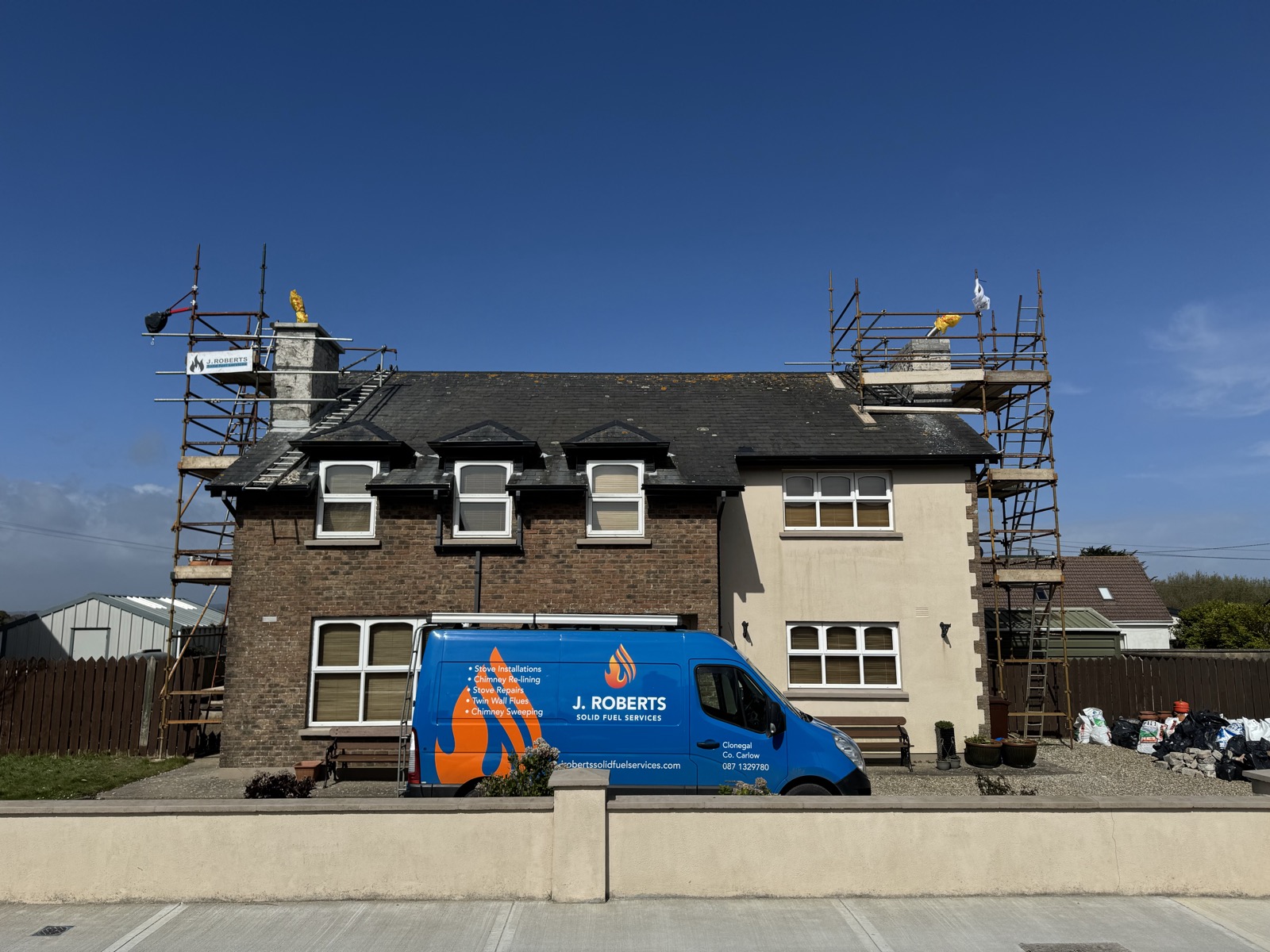
Most chimney problems start small and invisible — a hairline crack in a liner section, a failing mortar joint, a loose flashing. Left unaddressed, they become expensive repairs or outright safety hazards. The difficulty is knowing what to look for. Here are the seven signs I see most often when surveying chimneys across Ireland, ranked by urgency.
Smoke or Fumes Leaking Into Rooms
If you can smell smoke in rooms that aren't connected to the fireplace, or if smoke is visibly coming from the chimney breast or ceiling, there is a break in the flue lining. Combustion gases — including carbon monoxide — are finding a route out of the flue into the living space. This is a serious safety issue. Stop using the fireplace or stove immediately and call a chimney specialist for a CCTV inspection.
🔴 Urgent — stop using immediatelyCO Alarm Activating
A carbon monoxide alarm is activating during or after lighting the stove or fireplace. CO is odourless and colourless — you cannot detect it without an alarm. If your CO alarm is going off, treat it as an emergency: open windows, get everyone out of the house, and call the fire brigade. Once the immediate danger is addressed, a CCTV chimney inspection is essential before the appliance is used again. CO leaks from chimneys kill people in Ireland every year.
🔴 Urgent — treat as emergencyDebris Falling Into the Fireplace
Pieces of clay liner, masonry fragments, or clumps of debris falling into the fireplace from above are a clear sign that the internal structure of the flue is deteriorating. This is often the result of freeze-thaw action on unlined old chimneys, or a chimney fire that cracked the liner but wasn't noticed at the time. A CCTV inspection will show you exactly what's happening above the visible opening.
🔴 Get inspected this week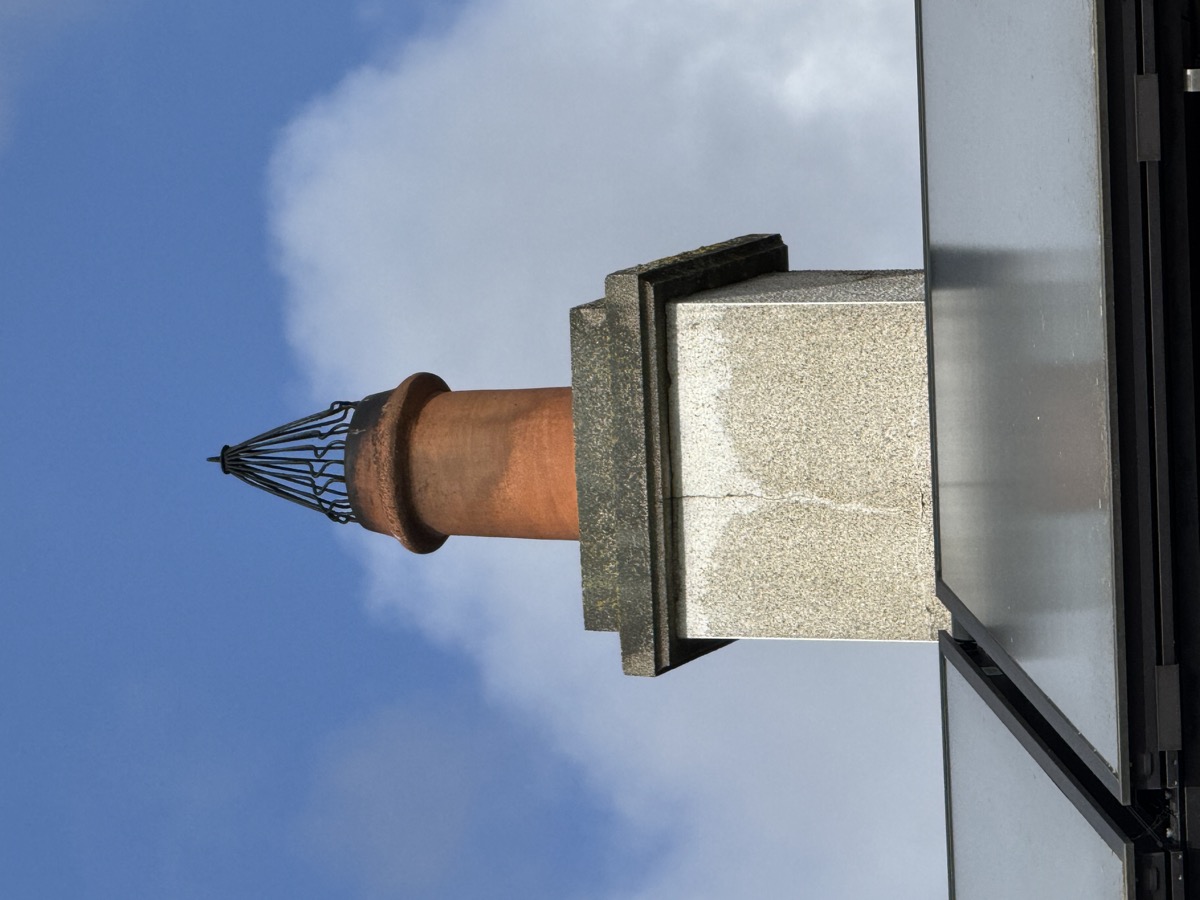
Damp Patches on the Chimney Breast or Ceiling
Damp staining on the walls or ceiling around the chimney is almost always caused by water ingress. The most common sources: failed or missing chimney pot, cracked render on the chimney stack, failed lead flashing at the roof junction, or missing damp-proof course. This type of damp damages plaster, causes mould, and will eventually compromise the masonry structure if not fixed. Damp also saturates chimney insulation and dramatically reduces the draw.
🟡 Repair within the monthPoor Draw — Smoke in the Room
If your fire smokes back into the room or is difficult to keep lit, the chimney is not drawing correctly. Common causes: insufficient height, a blocked or partially blocked flue, a flue that is too large in diameter for the appliance, missing or broken chimney pot, excessive bends in the flue route, or a liner that is undersized for the stove. Some of these are fixed with a chimney pot cowl; others require relining or structural work. A survey identifies the specific cause.
🟡 Inspect before next useVisible Cracks in the Chimney Stack
Cracks in the external brickwork or render of the chimney stack above the roofline are a sign of either structural movement, freeze-thaw action on saturated masonry, or damage from a chimney fire. Fine hairline cracks in render can be cosmetic, but wider cracks in the masonry itself indicate structural compromise that will worsen over time. In exposed locations — near the coast or on elevated sites — deterioration from wind and weather can be rapid. Get it assessed before winter.
🟡 Inspect this seasonA Leaning or Visibly Unstable Stack
A chimney stack that is visibly leaning, offset, or moving is a structural emergency. Failed mortar, saturated masonry, and missing ties can cause a chimney stack to become unstable. In severe cases, stacks have collapsed entirely — through the roof and into the house. If you can see that your chimney stack has moved or is leaning, do not go on the roof yourself. Call a specialist immediately for a structural assessment.
🔴 Emergency — call today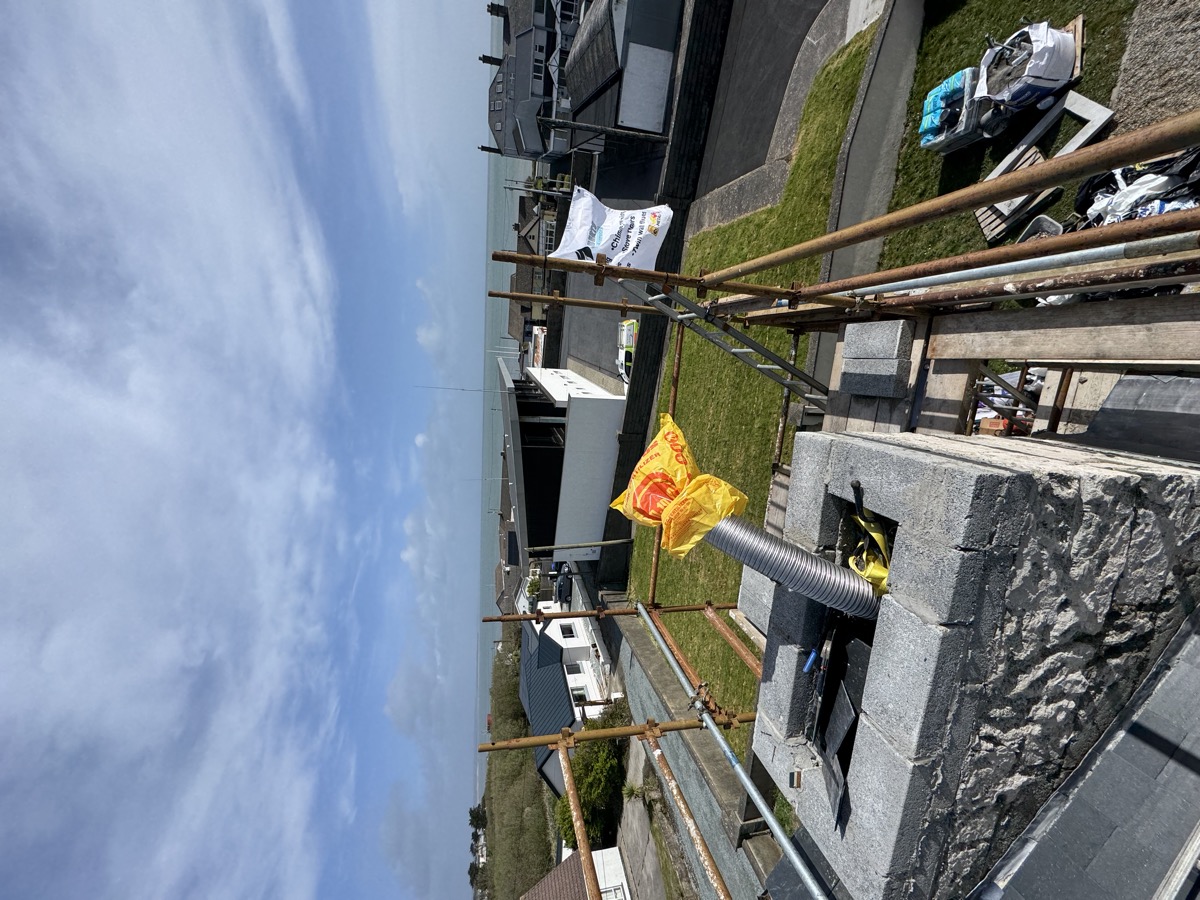
⚠️ Many chimney problems are invisible from outside. A CCTV camera inspection is the only way to see inside the flue and identify cracks, collapsed liner sections, blockages, and structural damage that look completely fine from ground level. If you're unsure about your chimney's condition, a survey is the fastest way to find out.
What Happens During a CCTV Chimney Survey?
Jonathon sweeps the chimney first to clear soot and debris, then feeds a high-definition camera up through the flue from the fireplace. The camera transmits a live feed to a monitor, and the entire inspection is recorded. You see what we see — cracks, spalling liner, blockages, water ingress — all on screen in real time.
The inspection takes approximately one hour and produces a written report with camera stills of any areas of concern. If the chimney is in good health, we tell you that too. Many homeowners come to us worried about their chimney and leave reassured that everything is fine.
Worried about your chimney? Get it inspected.
CCTV chimney inspections across Leinster and Waterford. Written report provided. Fully insured. Call Jonathon on 087 132 9780.