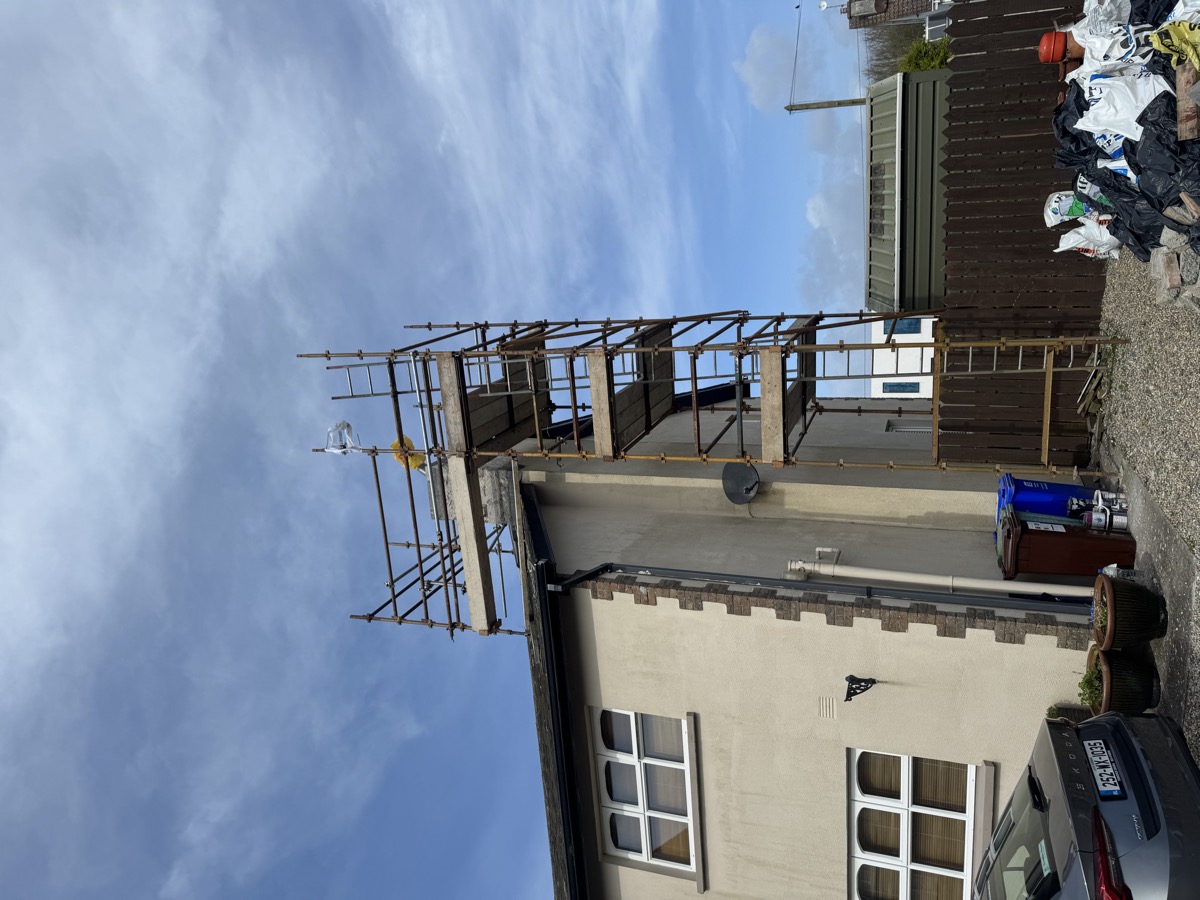
Chimney relining is one of the most misunderstood services in the building trade. Many homeowners don't know their chimney even has a liner — let alone whether they need a new one. This guide explains what a chimney liner is, why it matters, and when relining is required.
What Is a Chimney Liner?
A chimney liner is the inner tube that carries combustion gases from your fireplace or stove up through the chimney stack and out into the atmosphere. Without a proper liner, those gases — including carbon monoxide — can leak through cracks in the masonry into the rooms of your house.
Older Irish houses (built before the 1990s) typically have unlined brick or stone chimneys — the flue is just a void inside the masonry. This was acceptable for open fires burning modest amounts of fuel, but is completely inadequate for:
- Wood burning stoves or multi-fuel stoves
- Any appliance running at high efficiency
- Any chimney with cracks, gaps, or deteriorated mortar joints
- Any chimney that has experienced a chimney fire
When Is Chimney Relining Required?
1. Installing a Stove
This is the most common reason for relining. Building regulations in Ireland require a properly lined flue for any solid fuel stove installation. Stove manufacturers also require a lined flue to honour their warranty. If your chimney is unlined and you're having a stove fitted, relining is not optional.
2. After a Chimney Fire
A chimney fire can shatter clay liner sections, crack the masonry, and leave the flue structurally unsafe. In most cases, the entire liner must be replaced before the chimney can be used again. This is why a CCTV inspection is essential after any chimney fire — you cannot see this damage without a camera inside the flue.
3. Age and Deterioration
Clay liner sections in older chimneys can crack and spall over decades of use. The sulphuric acid produced by combustion eats into mortar joints. If a CCTV survey reveals sections that are cracked, displaced, or missing, relining is required for safety.
4. Smoke or Fumes Leaking Into Rooms
If you can smell smoke in rooms adjacent to the chimney — or carbon monoxide alarms are activating — the flue lining has likely failed. This is a safety emergency. Stop using the appliance and call a chimney specialist immediately.
5. Changing Fuel Type
Moving from an open fire to a stove, from wood to oil, or from gas to solid fuel often requires a different grade or diameter of liner. The liner must match the appliance output and fuel type.
Clay Liner vs Steel Liner — What's the Difference?
🧱 Clay / Pumice Liner
- Traditional circular or square sections
- Used in new-build or major rebuild situations
- Excellent longevity (50+ years)
- Cannot be retrofitted into existing chimneys
- Requires chimney to be opened for installation
- Higher installation cost
🔩 Flexible Steel Liner
- Stainless steel twin-wall flexible tube
- Used for retrofitting into existing chimneys
- Can navigate bends and offsets
- Installed in 1–2 days without opening the chimney
- Grade 904 for solid fuel, 316 for gas
- Typical lifespan 15–25 years
For most Irish homeowners retrofitting a liner into an existing chimney — either for a stove installation or after fire damage — a flexible stainless steel liner is the correct solution. It is quicker, less disruptive, and significantly cheaper than rebuilding the chimney to install clay sections.
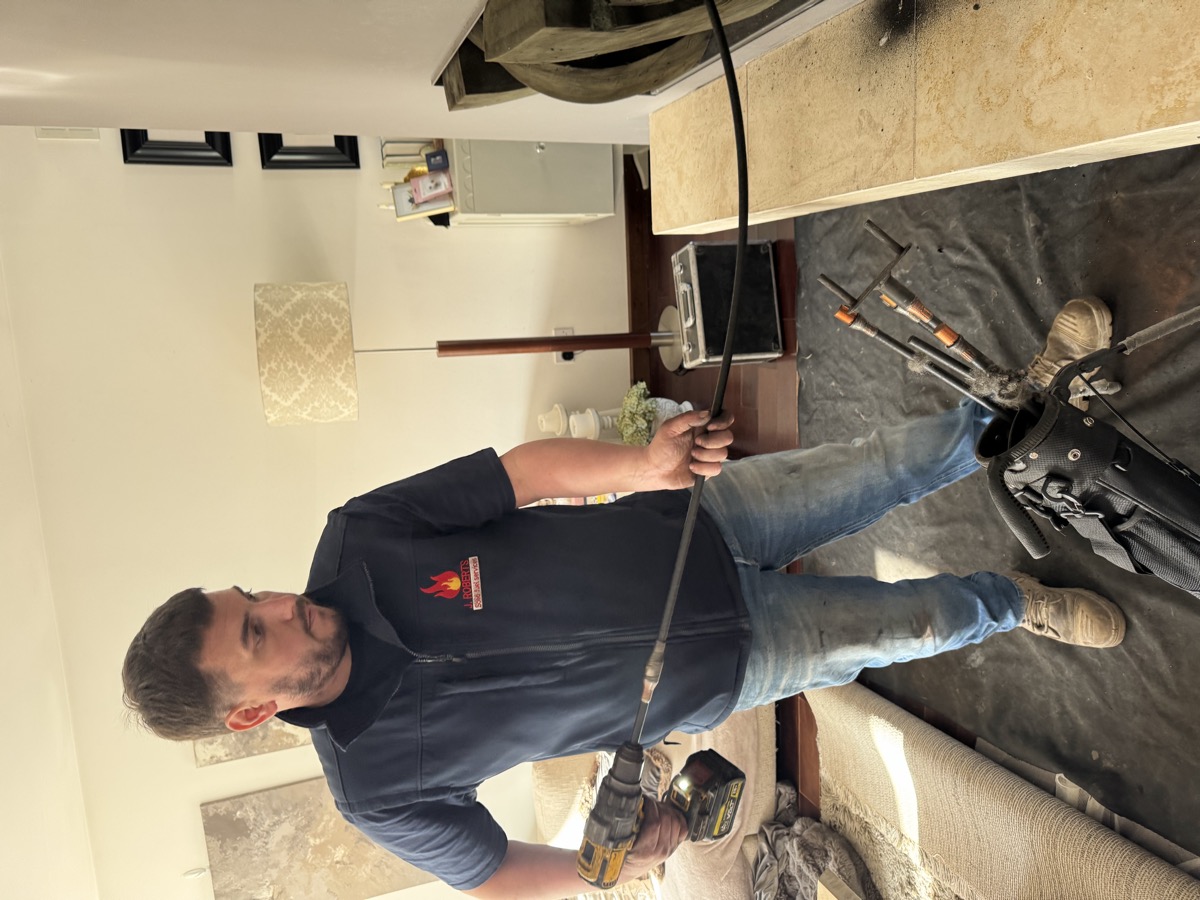
The Relining Process — What Actually Happens
A chimney relining with flexible steel liner typically follows these steps:
- CCTV inspection — the flue is surveyed by camera to assess the diameter, identify any obstructions, and map the route the liner will take
- Chimney sweep — the flue is swept clean before the liner is dropped
- Liner sizing — the correct diameter liner is selected based on the stove output and flue dimensions (typically 150mm or 175mm for solid fuel)
- Liner installation — the liner is attached to a nose cone and carefully dropped from the chimney top, guided through any bends
- Sealing — the liner is connected to the stove at the bottom and sealed at the chimney top with a plate and rain cap
- Insulation (where required) — vermiculite or mineral wool poured around the liner in the chimney void to improve draw
- Test fire and commissioning — the stove is lit and draw is confirmed before handover
How long does chimney relining take? For a standard single flue, one to two days. Two-storey houses or those with complex routing may take longer. We give you an accurate timeline at the survey stage.
How Much Does Chimney Relining Cost in Ireland?
Relining costs depend on the chimney height, liner diameter, and whether insulation is required. As a guide:
- Single-storey / bungalow: €400–€700
- Two-storey house: €600–€1,000
- With stove installation (supply & fit package): €1,500–€3,500 total
If the relining is required as a result of a chimney fire, the cost should be covered by your home insurance policy under the repair section of your claim.
Not sure if your chimney needs relining?
Run our free Chimney Suitability Checker first — 5 questions and it tells you whether relining is likely needed before any installation work. For a definitive answer, we carry out CCTV inspections across Leinster and Waterford. A camera survey tells you exactly what's happening inside your flue.