Chimney repair
across Louth
Drogheda and Dundalk terraces, Cooley peninsula exposure, coastal stacks. Free CCTV survey, insurance claims handled start to finish, certificate the day we finish.
Two towns and a coast, in the smallest county in Ireland
Louth is unusual in a way that matters for this trade. It is the smallest county in Ireland by area and densely settled, and it does not have one county town with a rural hinterland. It has two substantial towns, Drogheda and Dundalk, at opposite ends, with a coastline and the Cooley peninsula between them.
That gives three distinct chimney populations inside about thirty miles: terraced town stock in both towns, exposed coastal and upland housing along the shore and on Cooley, and a compact rural remainder. Almost nowhere in the county is far from anywhere else, which is why a Louth survey trip covers more ground in a day than a Meath one.
Census 2022 recorded Louth's stock of habitable dwellings up 7% between 2016 and 2022, the same rise as Dublin. Steady growth rather than the 12% that Meath and Kildare saw, so this county remains dominated by its older housing rather than by new estates.
Straight about distance, because it is the furthest county on the list: the van works out of Clonegall, Co. Carlow, and Dundalk is close to two hours. For a rebuild, a reline or an insurance job that runs across several days that is workable. For a small call-out it is not sensible, and you will be told so on the phone rather than after a wasted morning.
Terraced towns mean shared stacks
Both towns are old, and both grew through the eighteenth and nineteenth centuries as ports and industrial centres. What that leaves behind is street after street of terraced housing with the stack sitting on the party wall.
A shared stack changes the job in two ways, and neither is obvious from the street.
First, a cracked flue is not only your problem. Where the masonry between two flues has failed, smoke and combustion gases can pass from one flue into the next, which means into the neighbouring house. The symptom often shows up next door rather than in the house that owns the fault, which is exactly why it gets ignored. Treat a smell of smoke in a room with no fire lit as something to check rather than something to air out.
Second, a rebuild affects two houses. On a shared stack the work, the access and sometimes the insurance claim involve both owners. That conversation is far easier had before the scaffold arrives than after, and a survey that documents which flue belongs to which house is what makes it a straightforward conversation instead of an argument.
Access follows the same pattern as any old town centre. A terrace with the front door onto the footpath needs scaffold rather than a ladder, and scaffold on a public footpath means a licence from Louth County Council. It is routine, it just needs programming at the start rather than discovering halfway through.
Where the weather actually does the damage
Louth has a genuine coastal strip, and unlike much of the east coast it also has high exposed ground on the Cooley peninsula rising above Carlingford Lough. Clogherhead, Termonfeckin, Blackrock, Carlingford and Omeath sit in conditions the inland part of the county does not experience.
The relevant standard is I.S. EN 1996-2, which classifies masonry exposure. The severe class, MX4, covers masonry exposed to saturation with airborne salt or seawater. That is the technical basis for saying a stack within a few hundred metres of the shore weathers differently from one in Ardee, and it is a more useful thing to know than a vague claim about sea air.
In practice, salt-laden air accelerates mortar loss. It works into the joints, crystallises as it dries and pushes the mortar apart from the inside, so the pointing on a seaward face fails years before the sheltered face on the same stack. A chimney where the west side looks sound and the east side is soft to a screwdriver is a normal finding along this coast.
On Cooley the additional factor is wind rather than salt. High exposed ground with nothing to break the weather means driving rain hits one face for days at a time, and driving rain is what finds a hairline crack in flaunching and turns it into a saturated stack.
None of that means a coastal chimney is a problem. It means the inspection interval is shorter and the mortar specification matters more, and it means a repointing job done in the wrong mix will not last as long here as it would inland.
Why Louth chimneys fail
Sulphate attack, and why stacks lean
Burning coal and turf produces sulphates. In an unlined flue those gases soak into the mortar joints and over years react with the cement and expand it. The joints swell, the stack grows unevenly and it starts to lean, almost always away from the prevailing wind because that face stays wet longest. It does not stop and it cannot be pointed out of existence. On the older terraced stock in both towns this is the most common structural finding.
Salt-accelerated mortar loss
Covered above, and specific to the shore. The tell is asymmetry: one face of the stack noticeably softer than the other. Repointing that in an overly hard cement mix traps salts and moisture behind a rigid face and makes the next failure worse rather than better.
Flaunching, the most common single failure
Flaunching is the sloped mortar cap that beds the pots and sheds water. It is the most exposed mortar on the building and it goes first everywhere, but on an exposed coastal or Cooley stack it goes faster. When it cracks, rain runs down inside the masonry instead of off the top, and the first sign indoors is a damp patch high on a chimney breast after heavy rain.
Lead flashing at the roofline
Where the stack passes through the slates there should be lead soakers and a stepped flashing dressed into the mortar joints. Plenty of older Louth houses have a mortar fillet instead, and a mortar fillet cracks within a few winters. Water then tracks into the roof timbers, which is how a chimney problem becomes a roof problem.
Oversize flues serving small stoves
A great many older houses had a stove dropped into a fireplace built for an open fire. The flue is far wider than the stove can fill, so the gases slow, cool and condense on the way up instead of drawing cleanly. That condensate is acidic and it goes into the masonry. An oversize flue is a genuine safety problem, not merely an inefficiency.
Ventilation in newer housing
Louth's stock grew 7% between 2016 and 2022, so there is a real body of newer housing here too, and new houses are built airtight. TGD J 4.2.1 requires a permanent vent of at least 6,500 mm² of free area for any non-room-sealed solid fuel appliance, plus 550 mm² per kilowatt above 5 kW, so an 8 kW stove needs 8,150 mm². There is no under-5kW exemption in Ireland; that comes from UK Approved Document J, as do DEFRA exemption and Smoke Control Areas.
What chimney damage looks like from inside the house
Almost nobody rings about a chimney. They ring about something else that turns out to be the chimney.
- →A damp patch high on the chimney breast. Usually flaunching or flashing. It appears after heavy rain and fades between, which is why people live with it for a year.
- →Smoke smell in a room with no fire lit. On a terraced shared stack this can mean gases crossing between flues, and the fault may belong to the house next door. Worth checking rather than airing out.
- →Mortar soft on one face of the stack only. Classic coastal asymmetry. The seaward face fails years before the sheltered one.
- →Debris in the grate. Mortar and brick fragments coming down mean the inside of the flue is breaking up.
- →The stack looks off plumb. Sight it against the party wall or the gable on a clear day. If it is leaning, stop using the fire.
- →A roaring sound with no obvious cause. That is a chimney fire in progress. Ring 999, then have the flue inspected before it is used again. A chimney fire cracks liners and masonry even when the house comes through fine.
If you are unsure what you are looking at, the photo-based damage assessment gives a straight answer before anybody visits.
Every type of chimney repair, done properly
Relining. A stainless liner sized for the appliance, fed from the top, connected at the stove and sealed at the pot. Under TGD J Table 2 a closed appliance up to 20 kW burning timber, peat or bituminous coal needs at least 150 mm internal diameter; only smokeless fuel or wood pellets may drop to 125 mm.
Partial rebuild. The stack taken down to sound masonry above roof level and rebuilt, which on a terrace is usually the right call because the damage concentrates in the exposed head.
Full rebuild. Down to the roofline and back up, with new flaunching, new pots and new lead. On a shared stack this needs agreement with the neighbour, best had early.
Repointing in the correct mortar. Which matters more on a salt-exposed coastal stack than almost anywhere, because too hard a mix traps moisture and salts behind a rigid face.
Flaunching renewal. The mortar cap cut out and recast to the correct fall, pots rebedded. Cheap, quick, and it prevents the expensive job.
Lead flashing. Proper code lead, stepped and dressed into the joints with soakers under the slates. Not a mortar fillet.
Ventilation corrections. Cutting in a permanent vent to the 6,500 mm² minimum, or more where the output demands it.
Fire and storm damage. Assessed, documented and rebuilt, with the insurance handled in parallel. See insurance and fire damage.
More detail on the main chimney repairs page and the lining and cleaning page.
What chimney repair costs in Louth
Real ranges, including VAT, labour, materials, scaffold or hoist where needed, waste away and the certificate.
| Work | Typical range |
|---|---|
| CCTV survey | Free with any repair |
| Flaunching renewal | €450 – €1,100 |
| Lead flashing | €600 – €1,400 |
| Relining | €1,400 – €2,800 |
| Partial rebuild, above roof level | €2,000 – €4,500 |
| Full rebuild, single stack | €3,500 – €8,000 |
| Full rebuild, double stack | €8,000 – €14,000 |
| Insurance excess on an approved claim | €200 – €300 |
A bungalow outside Ardee with a yard to work from sits at the bottom of its band. A tall shared stack on a Drogheda or Dundalk town-centre terrace with no rear access, needing a scaffold licence from Louth County Council, sits at the top. Nobody can tell you which you have over the phone, which is why the survey is free and the quote follows in writing.
Indicative only. An exact figure follows the survey, in writing, before any work starts.
We handle the Louth claim from start to finish
Storm damage and chimney fires are covered by most Irish household policies. Gradual deterioration is not. That single distinction decides most claims, and it gets decided by how the damage is documented rather than by what happened on the roof.
That distinction is sharper on this coast than most places, because salt-accelerated mortar loss is gradual deterioration and storm damage is not, and the two can look similar from the ground. Documenting the mechanism properly is what separates an approved claim from a refused one.
In practice that means CCTV footage of the flue, photographs of the stack before anything is touched, a written report describing the mechanism of failure, and an itemised costing set out the way loss adjusters expect. Then Johnny deals with the adjuster directly.
On a shared terrace stack a claim can involve two policies and two households, which is another reason to get the survey right at the start rather than after a dispute has begun.
On an approved claim you pay your excess, typically €200 – €300, and nothing else.
One thing worth saying plainly: no Irish insurer makes annual sweeping a condition of cover. Sweeping is worth doing and a record helps a claim, but nobody voids a policy over a missed year.
Full detail on insurance and fire damage work, and on how a claim actually runs.
What needs doing now, and what can wait until spring
| Finding | How urgent |
|---|---|
| Gases crossing between flues on a shared stack | Immediately. Tell the neighbour. |
| Leaning stack | Stop using the fire. Same week. |
| After a chimney fire | Do not relight until inspected |
| Loose pots over a public footpath | Urgent. It is a street below. |
| Mortar soft to a screwdriver on the seaward face | Before winter storms |
| Cracked flaunching, no damp yet | This year, not this week |
| Pointing tired but sound | Monitor. Often several years left |
The top row is the terrace-specific one, and it is the one people are most inclined to shrug at because the symptom appears in somebody else's house.
Every corner of the county
Louth uses two Eircode routing keys, and one of them reaches across the county boundary.
| Key | Post town |
|---|---|
| A91 | Dundalk |
| A92 | Drogheda |
| A92 | Ardee (A92 also covers Laytown, Bettystown and Mornington in Co. Meath) |
A92 straddles the county boundary. It covers Drogheda and Ardee in Louth and the Laytown to Mornington strip in Meath. The Drogheda hinterland has never respected the county line and neither does the routing key, which is why the Meath page is worth a look if you are on the south side of the river.
Because the county is compact, several Louth jobs get grouped onto one run rather than scheduled as separate trips. Mention the town and whether there is rear access when you ring and the estimate lands closer first time.
One tradesman, not a call centre
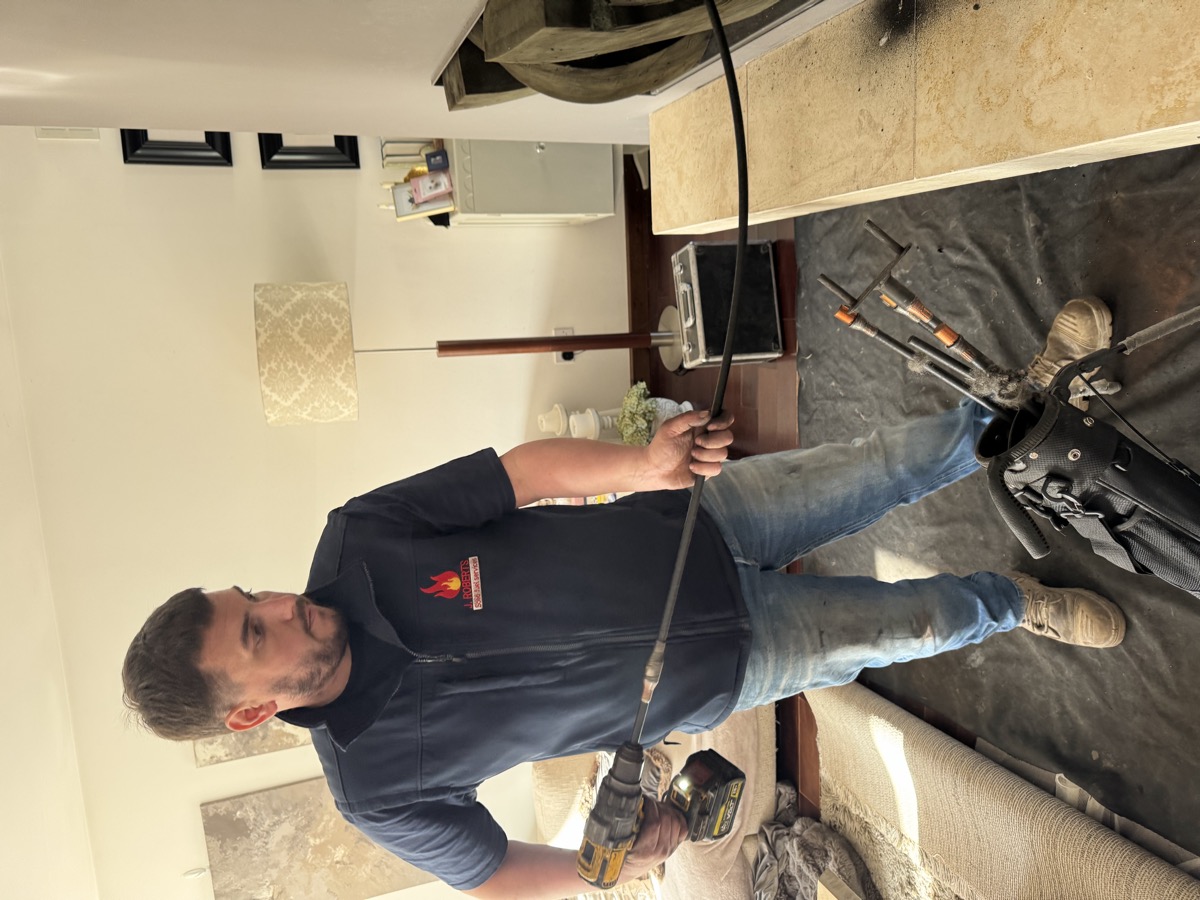
Johnny Roberts runs J.Roberts Solid Fuel Services on his own out of Clonegall, Co. Carlow. Ring the number and you get him. The person who surveys your chimney is the person who does the work.
There is no statutory register for solid fuel work in Ireland, so what is actually checkable is the insurance, the work itself and the certificate. All three are available to see.
Chimney repair in Louth. FAQ
Do you actually travel to Louth?
Yes, for work that justifies it. Louth is the furthest county on the list. The van works out of Clonegall in Co. Carlow, so Dundalk is close to two hours and Drogheda somewhat less. For a rebuild, a reline or an insurance job running over several days that is workable. For a small one-off call-out it is not sensible and you will be told so on the phone. Because the county is compact, several Louth jobs get grouped onto one run.
My stack is shared with next door. Whose problem is it?
Both, usually, and it is far easier sorted early. Drogheda and Dundalk are full of terraced housing where the stack sits on the party wall, so a rebuild affects two houses and can involve two insurers. Where the masonry between flues has failed, smoke and combustion gases can pass into the neighbouring house, and the symptom often appears next door rather than in the house that owns the fault. A survey documenting which flue belongs to which house is what keeps that a conversation rather than an argument.
Does living near the sea damage a chimney?
It accelerates mortar loss rather than causing a different kind of failure. I.S. EN 1996-2 classifies masonry exposure, and the severe class MX4 covers masonry exposed to saturation with airborne salt or seawater. Salt works into the joints, crystallises as it dries and pushes the mortar apart from inside, so the seaward face of a stack at Clogherhead, Termonfeckin, Blackrock or Carlingford fails years before the sheltered face. The tell is asymmetry: one side soft to a screwdriver, the other sound.
How much does a chimney rebuild cost in Louth?
A partial rebuild above roof level typically runs €2,000 to €4,500. A single stack from the roofline is €3,500 to €8,000. A double stack is €8,000 to €14,000. Relining is €1,400 to €2,800. The survey is free and nothing is quoted until a camera has been down the flue. A shared stack on a Drogheda or Dundalk terrace with no rear access sits toward the top of its band because of scaffold.
Will insurance cover salt damage to my chimney?
Usually not, and that is worth knowing before you claim. Most Irish policies cover storm and fire damage but exclude gradual deterioration, and salt-accelerated mortar loss is gradual by definition. Storm damage is a different matter and is covered. The two can look similar from the ground, which is why documenting the mechanism of failure properly, with CCTV and photographs before anything is touched, is what separates an approved claim from a refused one.
My chimney is leaning. Is that urgent?
Treat it as urgent. It is usually sulphate attack, where flue gases have soaked into the mortar over years and expanded it, and it almost always leans away from the prevailing wind because that face stays wet longest. It does not correct itself and it does not stop. Stop using the fire and ring somebody the same week. On the older terraced stock in both towns this is the most common structural finding.
Why does my chimney smoke in a house that is only a few years old?
Almost always air supply rather than the flue. Louth's habitable stock rose 7% between 2016 and 2022, so there is real newer housing here, and new houses are built airtight. TGD J 4.2.1 requires a permanent vent of at least 6,500 mm² of free area for any non-room-sealed solid fuel appliance, plus 550 mm² per kilowatt above 5 kW, so an 8 kW stove needs 8,150 mm². There is no under-5kW exemption in Ireland; that is UK Approved Document J and it gets quoted here by mistake.
What does the free survey involve?
About an hour. A look at the stack from the roof, a CCTV camera down the flue, a check of the flaunching, the pots and the lead flashing where the stack meets the slates, and a look at the fireplace and any damp staining inside. On a terrace it also establishes which flue belongs to which house. You get told what is wrong, what needs doing now and what can safely wait. No charge, and the footage is yours to keep.
Why is there a damp patch on the chimney breast upstairs?
Usually one of three things. Failed flaunching, the mortar cap on top of the stack, which cracks and lets water straight down through the masonry. Failed lead flashing where the stack passes through the roof. Or an unlined flue, where condensing flue gases carry moisture into the masonry. A survey separates them quickly and they need completely different fixes, so guessing is expensive.
Does my flue have to be lined?
Not automatically. TGD J requires the flue to be suitable for the appliance, not lined as a matter of routine. Lining becomes necessary where the flue is oversize for the stove, leaks between floors, or shows cracking on camera. Older Louth houses often have a wide open-fire flue, and a small stove connected to it means the gases cool and condense inside the masonry instead of leaving. An oversize flue is a safety problem, not just an inefficiency.
Is there a registration scheme for chimney work in Ireland?
No. There is no statutory register for solid fuel chimney work in the Republic. HETAS withdrew from Ireland in March 2022 and is a UK body in any case, and DEFRA exemption and Smoke Control Areas are UK law that does not apply here. Gas has RGI; solid fuel has nothing equivalent. What you can actually check is public liability insurance, previous work in your own area, and the certificate issued at the end. Ask any contractor for all three.
Free planning tools
Plan your Louth chimney project in 5 minutes, free
Related guides & nearby counties
Chimney trouble in Louth?
The survey is free and a camera goes down the flue before anybody quotes. If it is a shared stack, you will be told exactly which flue is which.