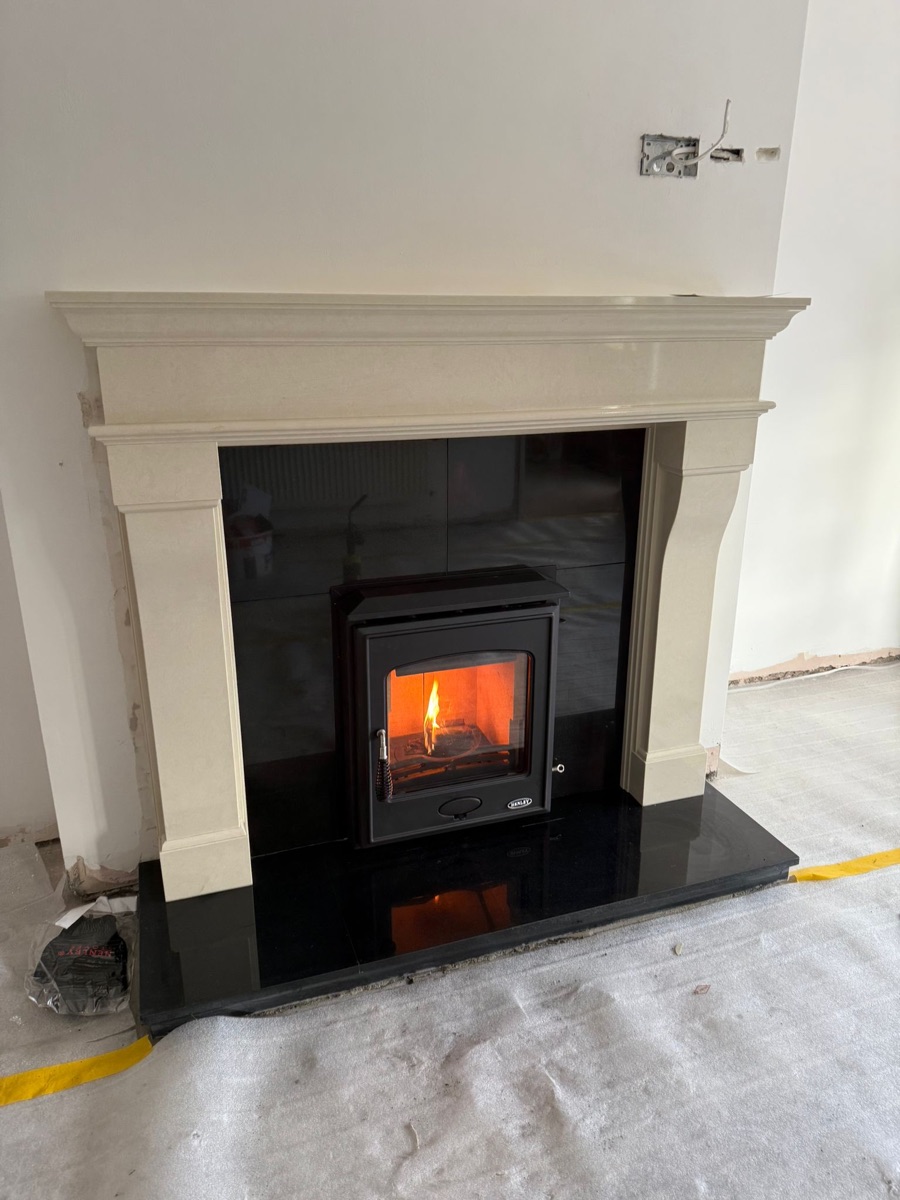
Wood burning stoves
supplied & fitted
Across Leinster and Waterford, from a base in Clonegall. Free survey, chimney lined where it needs it, fitted to Part J, certificate issued the day we finish.
An open fire throws most of its heat up the chimney
That is the whole case for a stove, and it is worth being precise about it. An open fire draws air out of the room continuously, up the flue, and out over the roof. A good portion of the warmth you paid for goes with it, and the fire pulls cold air in under doors to replace what it lost. It is why a room with a roaring fire can still have a cold corner.
A closed stove burns in a controlled box. You decide how much air goes in, the fire burns hotter and cleaner as a result, and the heat comes out into the room instead of past it. Since January 2022, any closed-fronted stove sold in the EU has had to reach at least 65% seasonal efficiency under Regulation 2015/1185. Decent models today sit in the mid to high seventies.
What follows is the detail most stove pages skip: what one genuinely costs to run using SEAI's published figures rather than a sales line, which regulations actually apply in this country as opposed to the UK ones that get quoted at people, and what the fitting day looks like. If you would rather just talk it through, 087 132 9780 gets Johnny directly.
How you buy the wood matters more than the stove
Most stove pages will tell you a stove is cheaper to run than oil or gas. That is true for some ways of buying wood and false for others, and the gap between them is close to double. These are SEAI's own figures from the Domestic Fuel Cost Comparison, which they update quarterly. The link always shows the current table.
| Fuel, as bought | Cost per kWh | What that means |
|---|---|---|
| Softwood, bulk loose, delivered | 8.5c | The cheapest heat on the table |
| Wood pellets, bulk | 10.3c | Needs a pellet stove |
| Softwood, full pallet, delivered | 10.4c | Good middle ground |
| Mains gas (typical household band) | 13.0c | Not available in most of our area |
| Hardwood, full pallet, delivered | 14.4c | Burns longer, costs more |
| Hardwood, small bags, collected | 15.3c | Dearer than mains gas |
| Kerosene (discounted) | 17.2c | What most local homes heat with |
| Electricity (typical household band) | 34.4c | Four times bulk timber |
Read the top and bottom of that table together. Bulk loose softwood is a quarter of the cost of electric heat and half the cost of kerosene. Hardwood in small bags from a filling station is dearer per unit of heat than mains gas. Same stove, same room, same evening. The difference is entirely in how the fuel was bought.
If you have somewhere dry to stack a load, that shed space is worth more than any feature on the stove itself. The households who see the savings they were promised are almost always the ones who buy a bulk load in spring and let it sit until winter.
Figures are SEAI's delivered energy cost, VAT included, before appliance efficiency is applied. Kerosene and oil prices in particular have moved sharply this year, so check the live table before relying on any of these numbers.
Which one suits the room you have
The choice is usually settled by the opening you already have and whether you want the stove to heat water as well as the room.
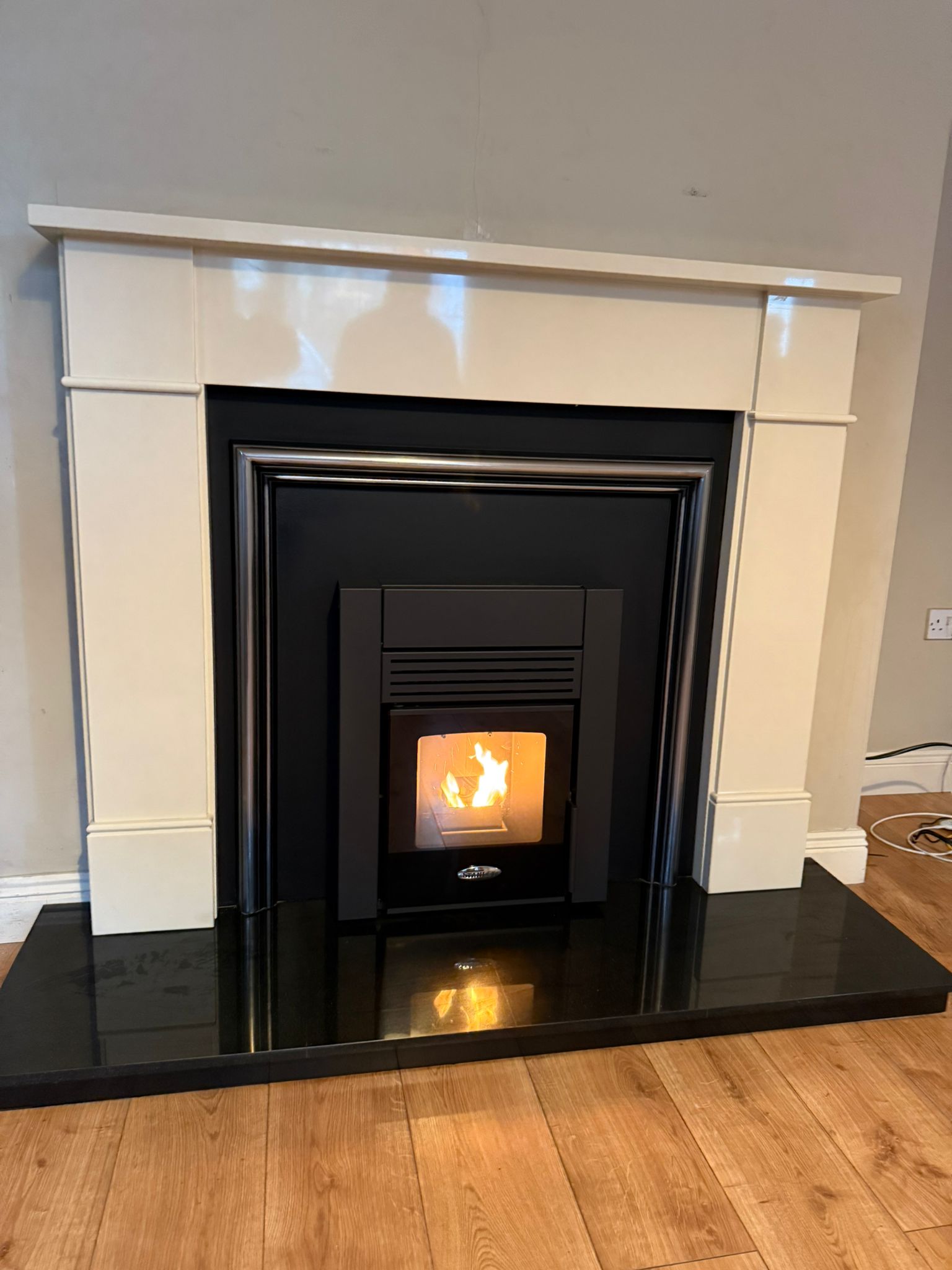
Almost everyone asks for too big a stove
The instinct is to buy plenty of stove so the room is never cold. It backfires. A stove too large for its room gets run with the air shut down to stop the place becoming unbearable, and a shut-down fire is a smouldering one. That deposits tar in the flue, dirties the glass within an evening, and voids the warranty on a good many stoves.
The starting point is simple arithmetic. Measure the room in metres, multiply length by width by height, and divide the result by 14. That gives roughly the kilowatts needed to hold about 21°C on a cold day.
Worked example
A sitting room 4 m by 5 m with a 2.4 m ceiling is 48 m³. Divide by 14 and you get 3.4 kW. In practice that room takes a 4 kW stove comfortably, or a 5 kW if the house is old and draughty. It does not want an 8 kW.
Adjust from there. A well-insulated newer house needs less than the sum suggests. A cottage with single glazing, solid walls and an open stairwell needs more, and the open stairwell in particular is worth mentioning at survey because it turns one room into two. Rooms open to a hallway or a kitchen behave as one larger space.
Most Irish homes land on 4 to 6 kW. If the sum is pushing you past 8 kW for a single room, the room is usually telling you something about its insulation rather than about the stove it needs. Our stove size calculator runs the same arithmetic with the adjustments built in.
Fitted to Part J, not to the UK rulebook
A lot of stove advice aimed at Irish homeowners is quietly British. It cites DEFRA exemption, Smoke Control Areas, HETAS registration and Approved Document J, none of which govern an installation in Carlow or Wexford. The document that does is Technical Guidance Document J, Heat Producing Appliances, published under the Building Regulations. Three of its requirements come up on nearly every job.
Air supply, and there is no 5 kW exemption in Ireland
You will read everywhere that a stove under 5 kW needs no air vent. That is the UK's rule. Irish TGD J requires a permanent ventilation opening for any non-room-sealed solid fuel appliance, with a free area of at least 6,500 mm², whatever the output.
Above 5 kW in a reasonably airtight house you add 550 mm² for every extra kilowatt. So a 5 kW stove needs 6,500 mm²; an 8 kW stove in the same house needs 8,150 mm².
The catch is the words free area. That is the open area air can actually pass through, not the size of the hole in the wall. A grille eats into it considerably, so the core drilled through the wall ends up larger than people expect. It is the single most common thing we find missing on stoves fitted by someone else.
Flue size: 150 mm if you burn wood
TGD J Table 2 sets a minimum of 150 mm internal diameter for a closed appliance up to 20 kW burning seasoned timber, peat or bituminous coal. Only appliances burning smokeless low-volatile fuel or wood pellets may go down to 125 mm.
This trips people up because plenty of stoves are sold with a 125 mm spigot. A 125 mm liner behind one of those is fine for smokeless fuel and not compliant for wood. If you intend to burn timber, the liner goes in at 150 mm and the stove is adapted to it.
Hearth
A constructional hearth is at least 125 mm of solid non-combustible material. A free-standing hearth laid on a non-combustible floor can be 12 mm. Back boilers are their own case: 125 mm thick, or 25 mm sitting on non-combustible supports at least 25 mm high. Sizes and the clearances to nearby walls come from the diagrams in the document, and they are checked on site rather than guessed.
One more piece of straight talk. There is no statutory register of stove installers in the Republic. HETAS pulled out of Ireland in March 2022, OFTEC registration carries no self-certification rights here, and METAC trains rather than registers. Anyone telling you they are on the Irish register is describing something that does not exist. What you can actually check is insurance, previous work, and the certificate issued at the end. Ask for all three, from us or anyone else.
Does the chimney have to be lined?
Not automatically, whatever you have been told. TGD J asks that the flue be suitable for the appliance. A sound masonry flue of the right size can take a stove exactly as it is, and we have surveyed plenty that needed nothing done to them.
What makes lining necessary is usually one of four findings:
- →The flue is oversize. A chimney built for an open fire is far wider than a 5 kW stove can fill. The gases slow, cool, and condense on the way up instead of drawing cleanly. An oversize flue can be genuinely unsafe, not merely inefficient.
- →It leaks between floors. Old parging breaks down and the flue starts sharing air with the wall cavity or an upstairs room. A smoke test finds this quickly.
- →CCTV shows cracking. We put a camera up before quoting rather than after starting, so the liner question is answered by a picture instead of an opinion.
- →There is no chimney at all. Then it is a twin-wall insulated flue built from the stove up through the roof, which is a different job with a different price.
If you want a sense of where your own chimney stands before anyone visits, the chimney suitability checker asks five questions and gives you a straight answer. There is more detail on the work itself on our chimney lining page.
Running radiators off the fire
In a house on kerosene, this is the install that shifts the numbers most. A boiler stove heats the room it stands in and sends the rest to your cylinder and radiators, so an evening's fire is doing the work the oil burner would otherwise do.
Two things are worth understanding before you commit. The first is that the output splits. A 13 kW boiler stove might put 4 kW into the room and 9 kW into the water, and it is the 4 kW figure you size against the room, not the 13. People who size on the headline number end up with a sitting room nobody can sit in.
The second is that it is a plumbing job as much as a stove job. The stove ties into your existing system, and it needs a heat leak radiator that cannot be valved off, so the fire always has somewhere to dump heat if the pump stops or the power goes. That radiator is not optional and it is not a way of selling you another rad. It is what stops the system boiling.
Expect two to three days on site rather than one, and expect us to want a look at your cylinder and controls at survey stage.
What a stove installation costs
These are real ranges, not a teaser figure. They cover labour, materials, waste away, commissioning and the certificate. Where the chimney needs work, that line is added on top rather than hidden inside the fit price, so you can see what you are paying for.
| Work | Typical range | Time on site |
|---|---|---|
| Home survey, CCTV where needed | Free, no obligation | About an hour |
| Inset stove, supplied and fitted | €2,200 – €3,500 | 1 day |
| Freestanding stove, supplied and fitted | €2,500 – €4,000 | 1 day |
| Boiler stove, plumbed into your heating | €3,500 – €5,500 | 2 – 3 days |
| Chimney liner, if the survey calls for one | €1,000 – €2,500 | Same day as the fit |
| Twin-wall flue, where there is no chimney | €1,800 – €3,200 | 2 – 4 days |
Ranges are wide because houses are. A stove into a sound, correctly sized chimney with an existing hearth sits at the bottom of its band. The same stove into a 1930s farmhouse that needs a liner, a new hearth and a cored vent sits near the top, plus the liner line. Nobody can tell you which you are from a phone call, which is why the survey is free and why nothing gets quoted until Johnny has been up on the roof and put a camera down the flue.
Prices include VAT. Indicative only. An exact figure comes after the survey, in writing, before any work starts.
What actually happens in your sitting room
Dust sheets down and the floor covered before anything else, because a fireplace opening being broken out makes a mess and there is no way around that. The old fire or insert comes out, and the opening is checked properly once it is empty. This is the point at which the occasional surprise appears, and if it does you hear about it before it costs you anything.
If a liner is going in, that is roof work: the liner is fed down from the top, connected at the stove, and sealed at the pot with a proper closure plate and cowl. The hearth goes in next if the existing one is not up to the 125 mm or 12 mm required, then the stove is set, levelled and connected.
The air vent is cored through the outside wall and grilled. It is the least glamorous part of the day and it is the part most often skipped by others, so it is worth watching it go in.
Then it gets lit. First burn is done before we leave, partly to check the draw and partly because you should see it working. Expect a smell off the paint curing for the first few fires, which is normal and passes. You get shown how to light it properly, how to run the air controls, what to burn and what never to, and the certificate goes in your hand before the van moves.
Everything that came out goes with us. No skip left on the drive.
What you burn decides how long the install lasts
A new liner can be tarred up inside two winters by wet timber. It is the fastest way to undo a good installation, and it is entirely avoidable.
Under S.I. 529/2022, wood sold for burning in homes must be at or below 25% moisture. That tightens to 20% from 1 September 2026. Two details get misreported constantly: the regulations govern the sale of fuel rather than what you burn in your own house, and they do not touch timber you cut and season yourself.
The practical version is shorter. Buy from someone who states a moisture figure. If you are seasoning your own, split it, stack it off the ground with the wind through it, and give it two summers rather than one. A cheap moisture meter settles arguments for about fifteen euro.
Never burn treated or painted timber, pallets, chipboard, MDF or driftwood. They release chemicals that corrode a liner from the inside and are not pleasant coming back into the room either.
Have the chimney swept once a year for a stove in regular use. Not because an insurer demands it. No Irish insurer makes annual sweeping a condition of cover, whatever you have been told. Have it swept because it is the cheapest hour you will spend on the thing.
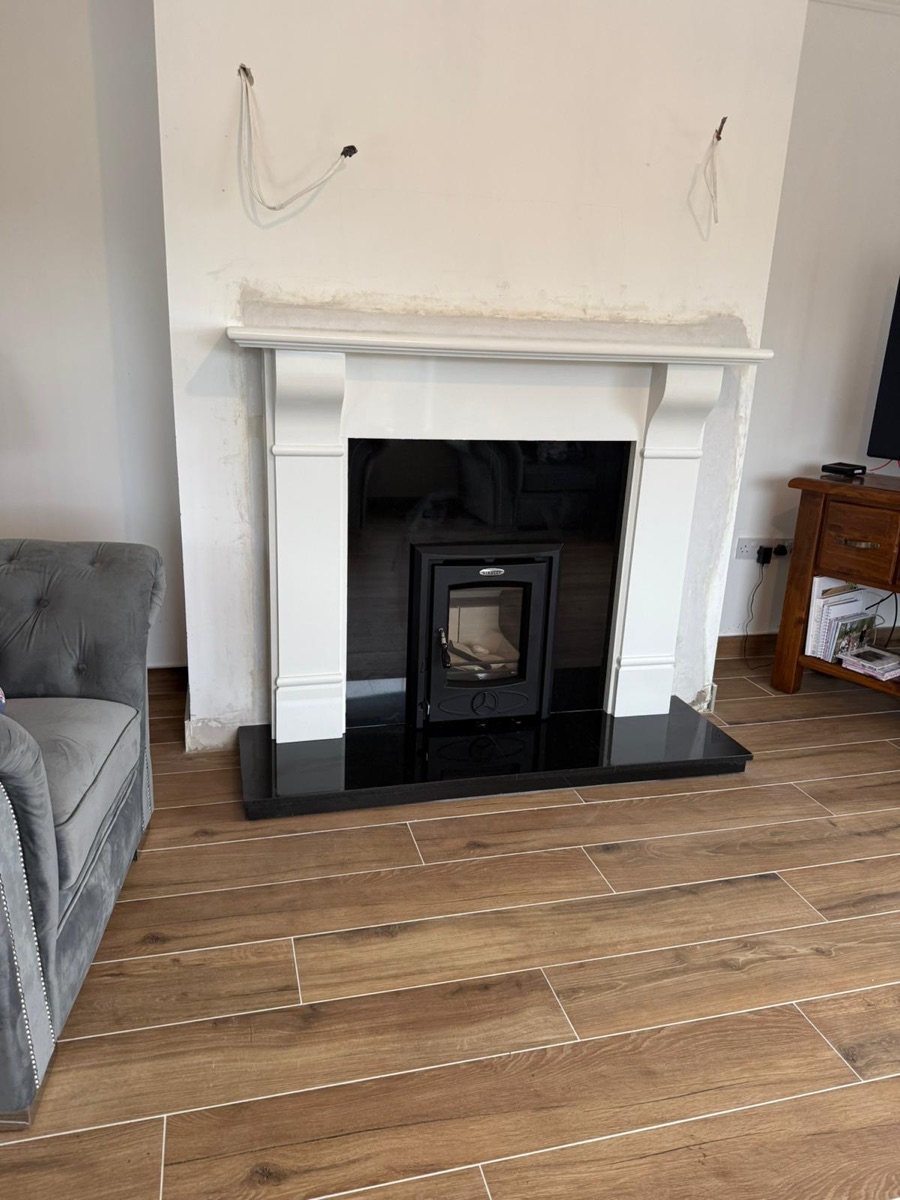
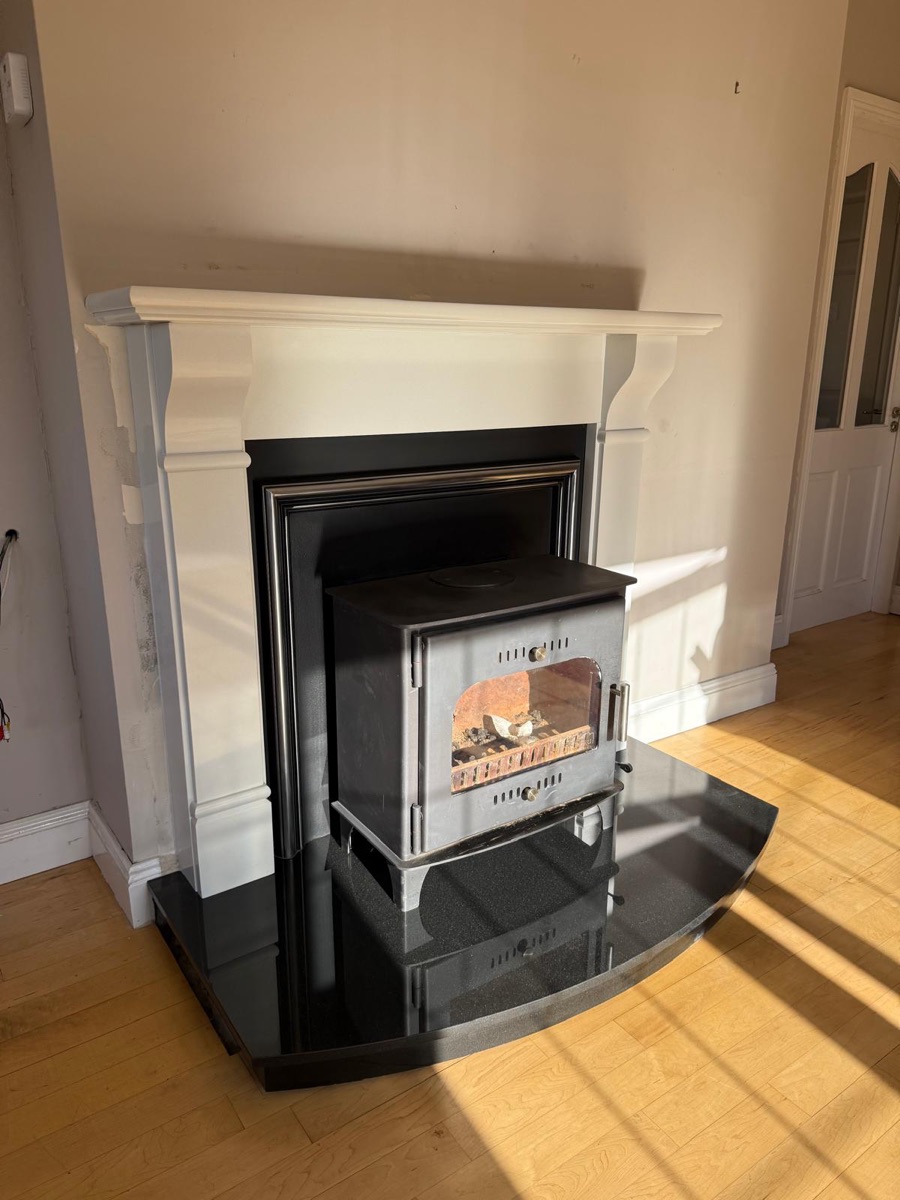
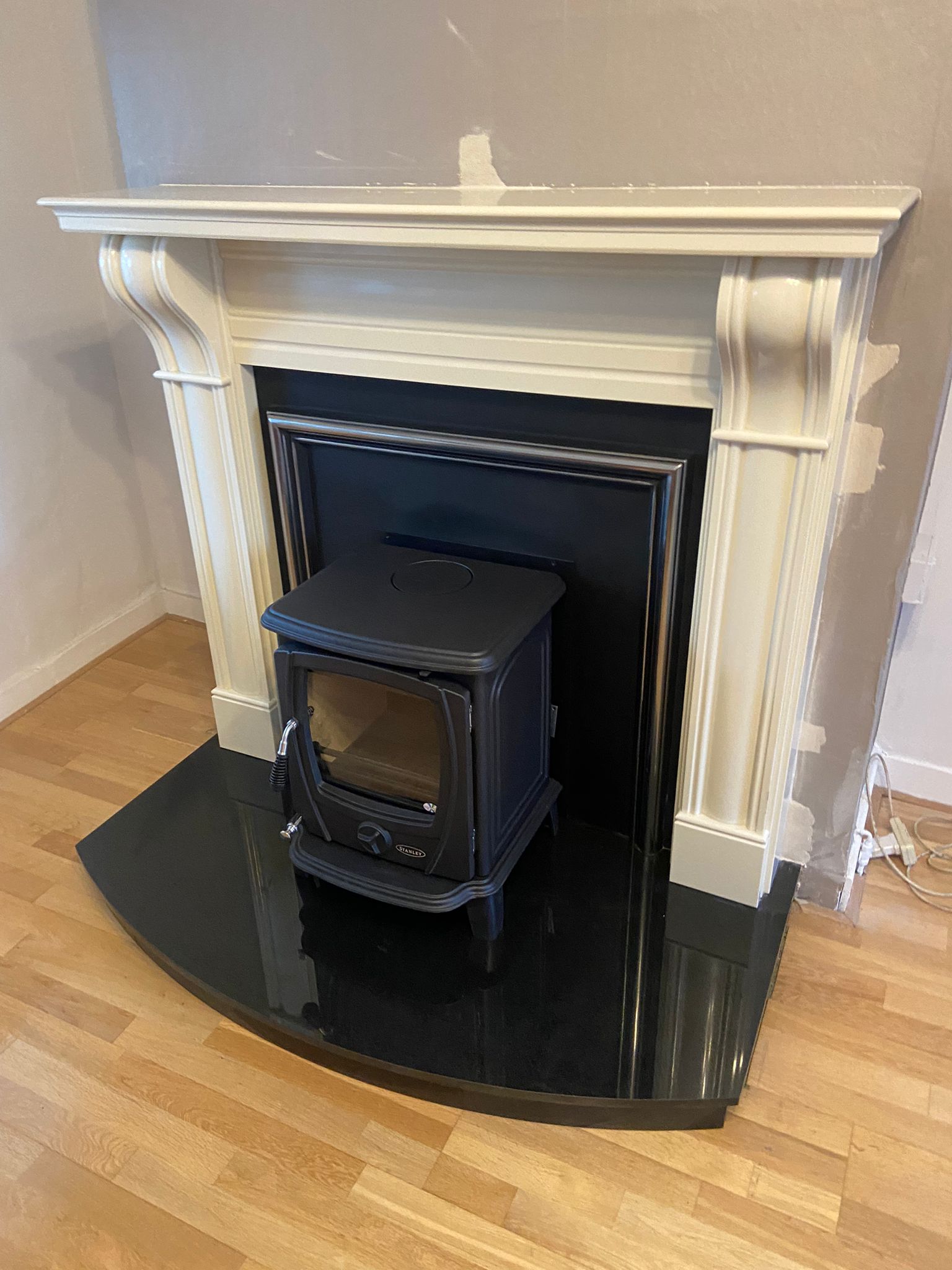
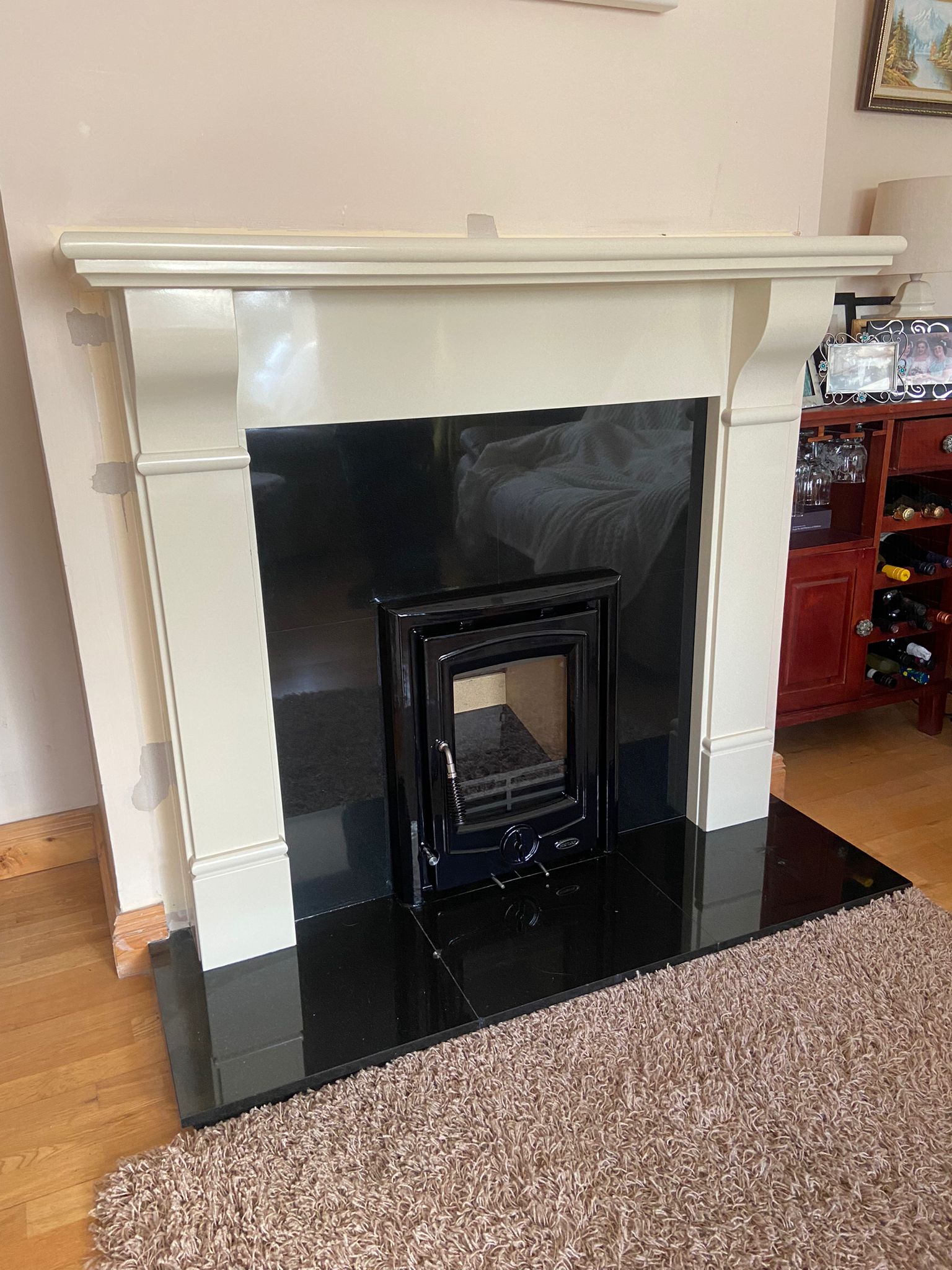
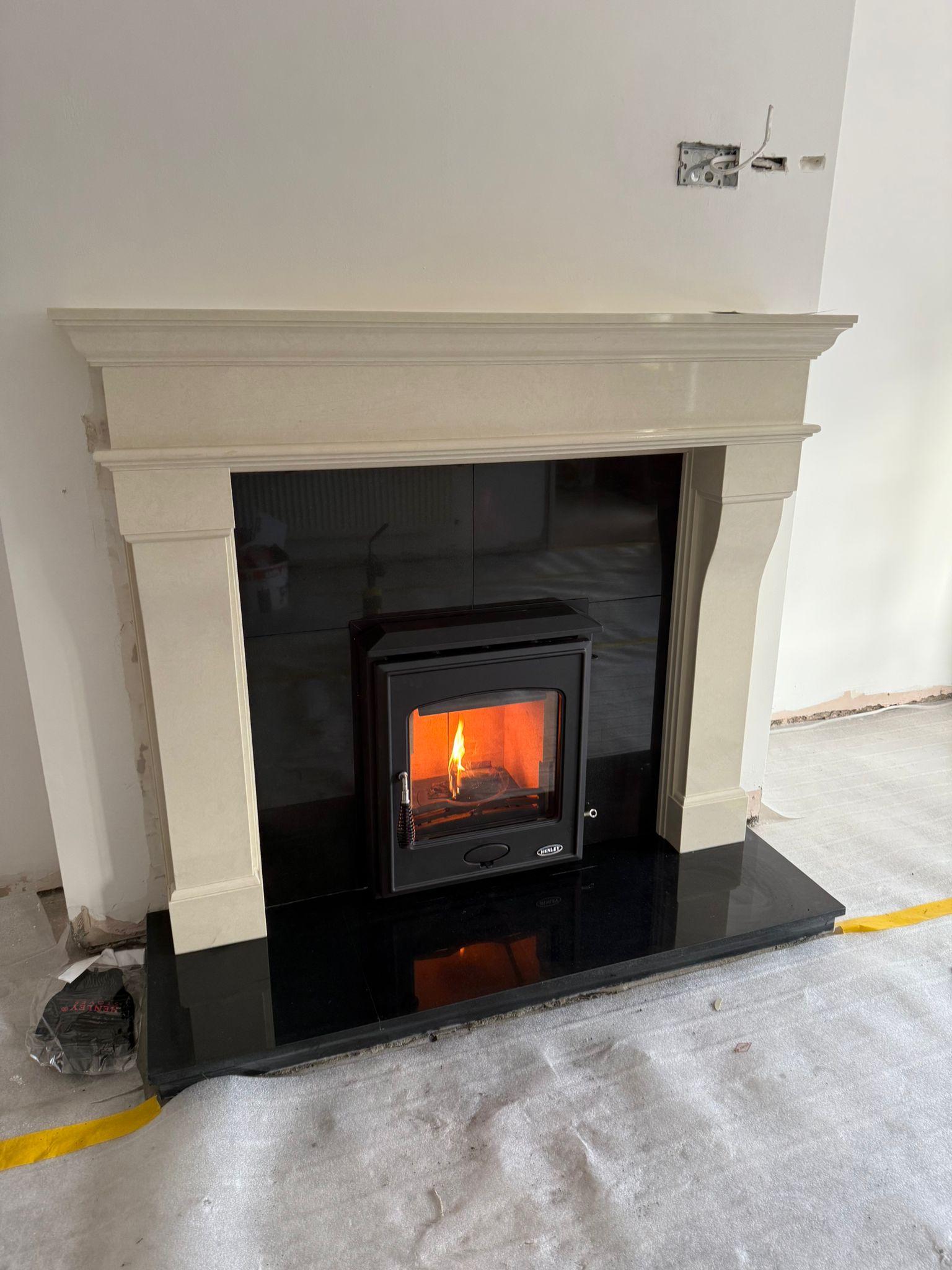
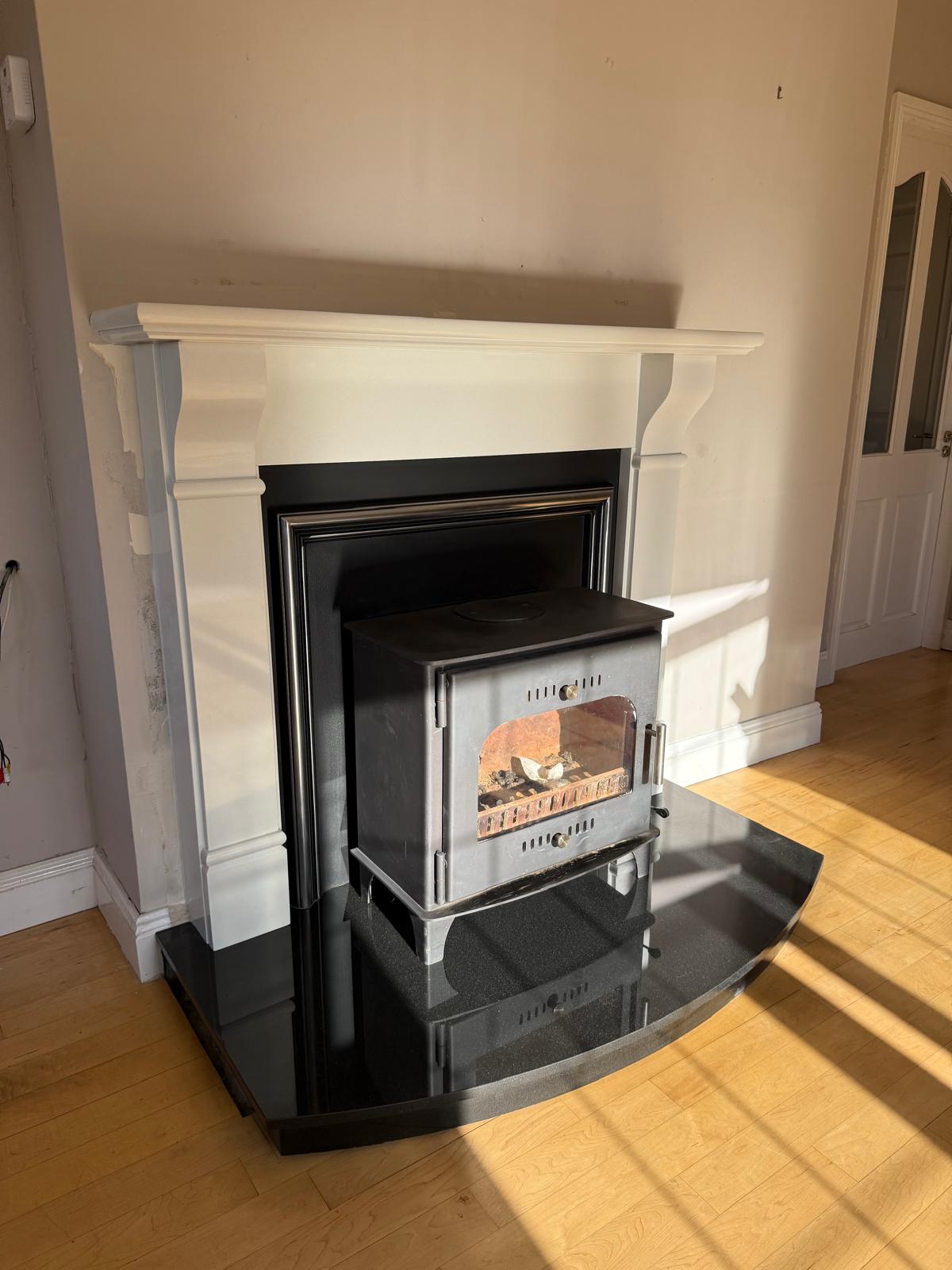
Real installations, photographed on the day
Every photograph on this site is Johnny's own work. None of it is stock.
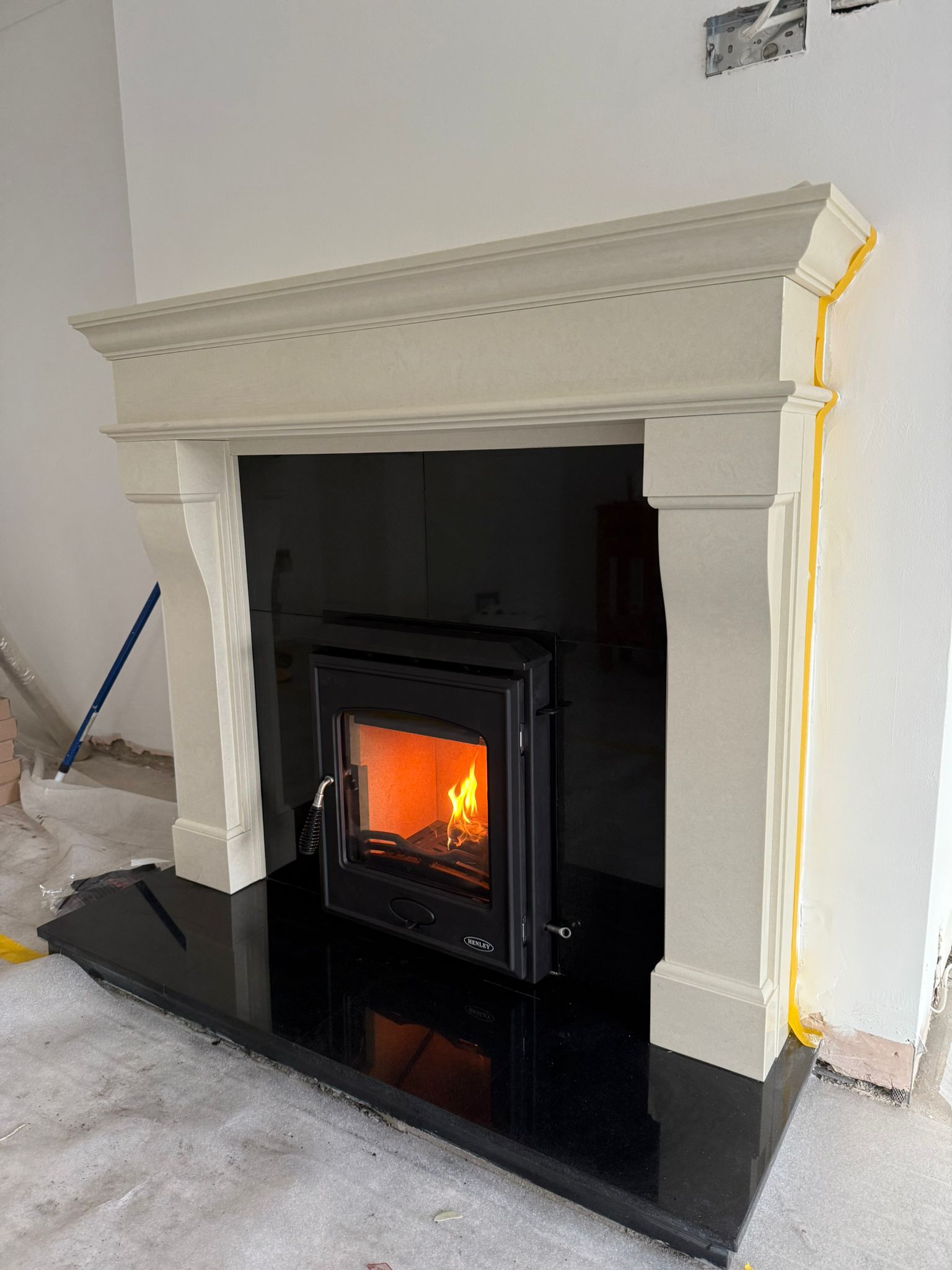
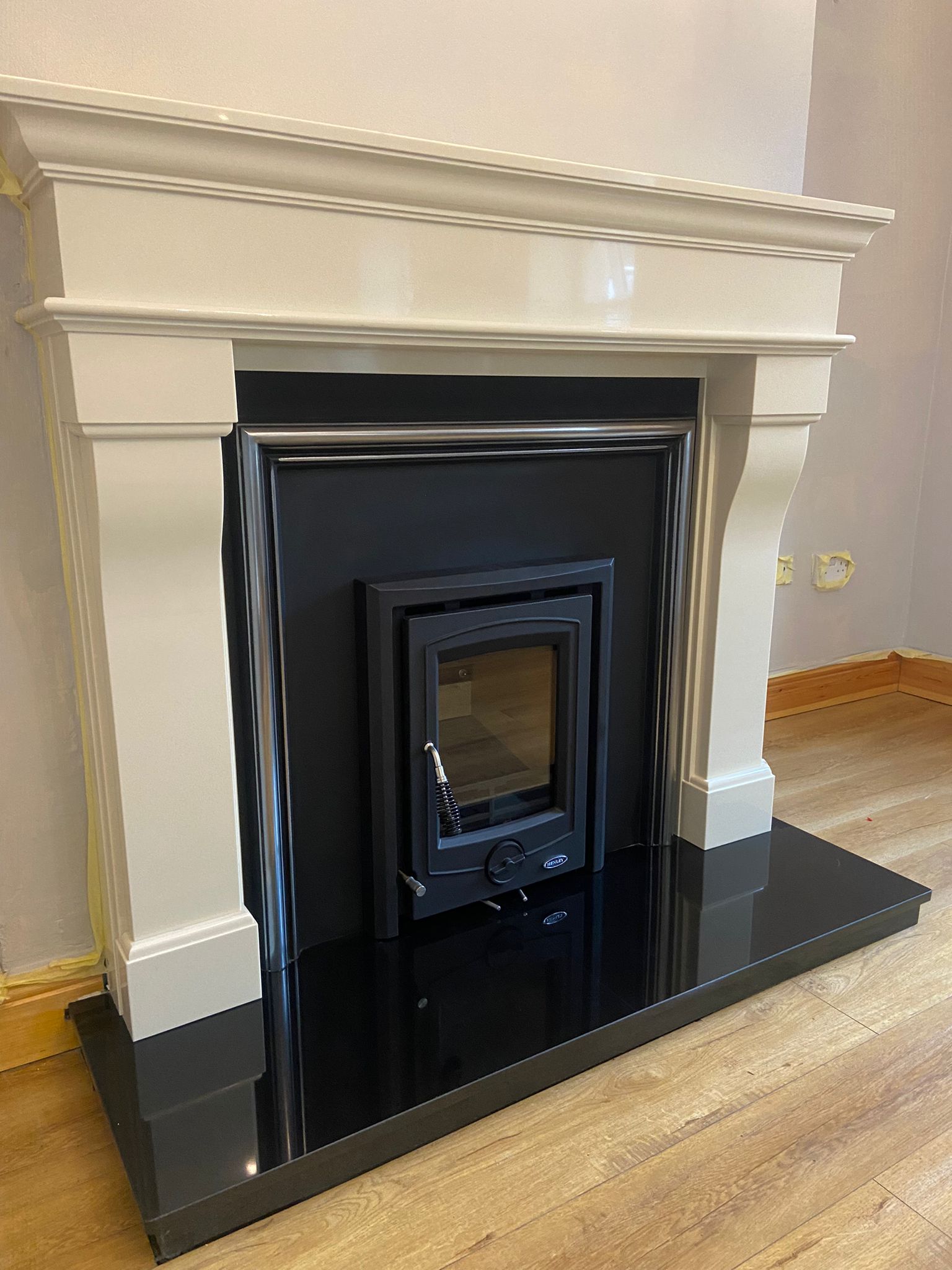
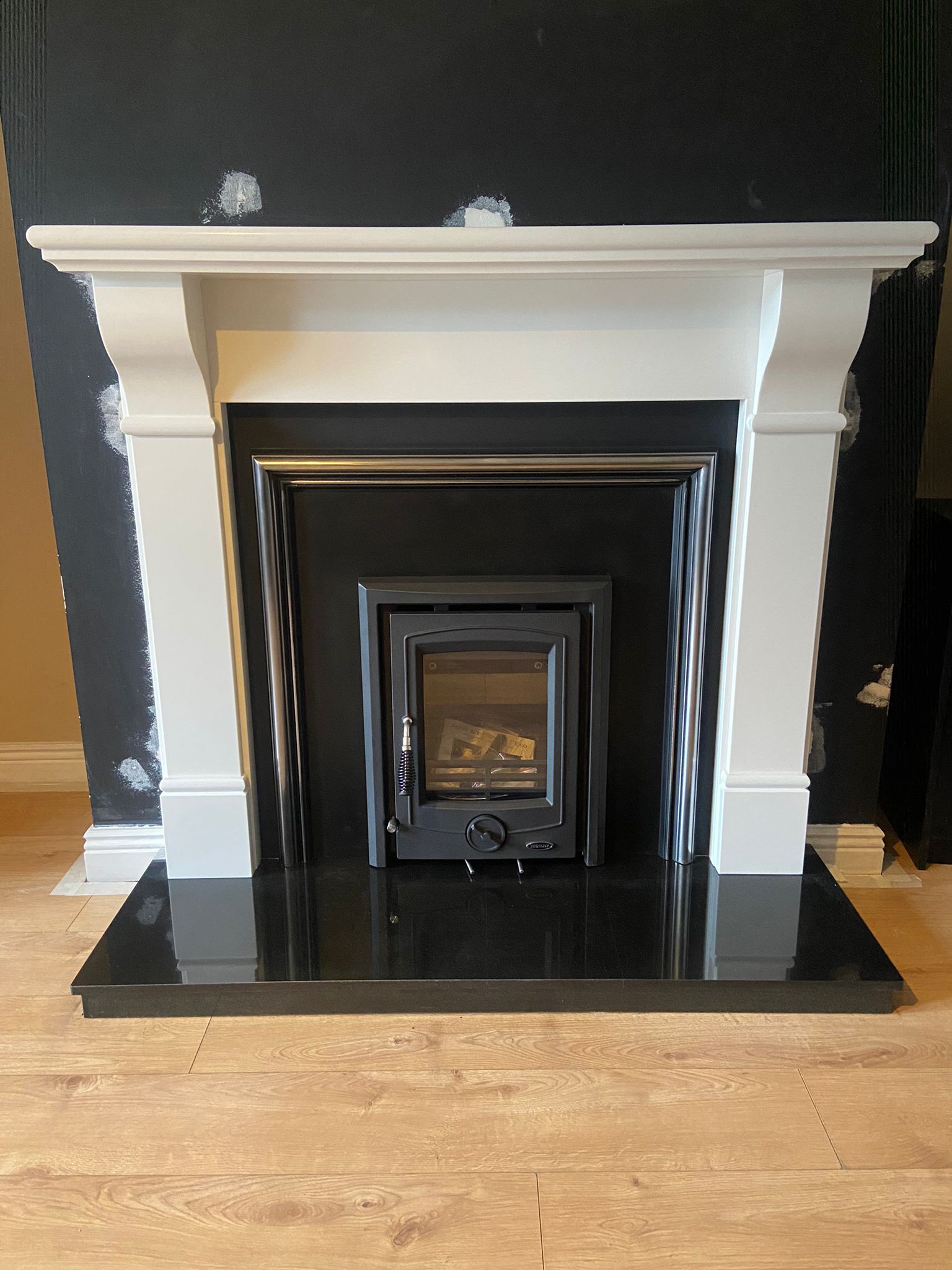
One man, one van, his own name over the door
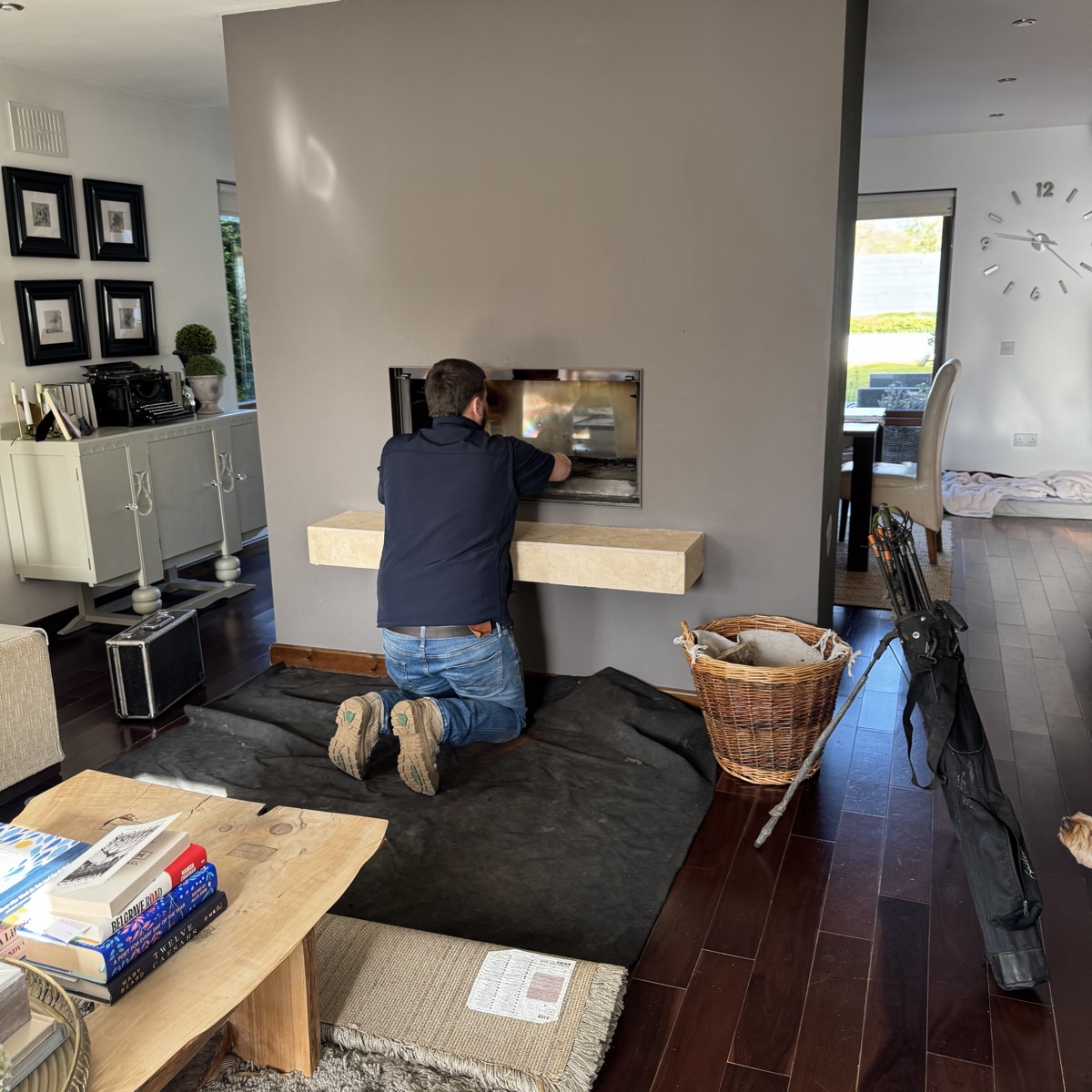
J.Roberts Solid Fuel Services is Johnny Roberts, working out of Clonegall on the Carlow–Wexford border. When you ring the number you get him, not a call centre, and the person who surveys your chimney is the person who fits the stove.
That is the whole reason the advice on this page is as blunt as it is. He is the one who comes back if it does not draw properly, so there is no percentage in selling anybody a stove that is wrong for the room.
Wood burning stoves. FAQ
Do I need an air vent for a stove in Ireland?
Yes. TGD J requires a permanent ventilation opening of at least 6,500 mm² free area for any non-room-sealed solid fuel appliance. There is no under-5 kW exemption in Ireland. That rule is from the UK's Approved Document J and gets quoted at Irish homeowners constantly.
What size flue does a wood burning stove need?
At least 150 mm internal diameter for a closed appliance up to 20 kW burning seasoned timber, peat or bituminous coal, under TGD J Table 2. Only smokeless low-volatile fuel or wood pellets may use 125 mm. Since plenty of stoves ship with a 125 mm spigot, this catches people out. A 125 mm liner is not compliant if you intend to burn wood.
Does my chimney have to be lined?
No, not automatically. TGD J asks that the flue be suitable for the appliance. A sound masonry flue of the right size can be used as it stands. Lining becomes necessary when the flue is oversize for the stove, leaks between floors, shows cracking on CCTV, or does not exist at all. An oversize flue can be unsafe as well as inefficient, because the gases cool and condense instead of drawing.
Is a stove really cheaper to run than oil or gas?
It depends on how you buy the wood, and the spread is close to double. On SEAI's figures, bulk loose softwood delivered is about 8.5c per kWh, well under kerosene at 17.2c and mains gas at 13c. Hardwood in small bags is about 15.3c, which is dearer than gas. The stove is the same either way; the buying decides it.
What size stove do I need?
Room volume in cubic metres divided by 14 gives roughly the kilowatts needed to hold about 21°C. A 4 m by 5 m room with a 2.4 m ceiling comes to about 3.4 kW. Most homes here end up on 4 to 6 kW. Oversizing is the more common and more damaging mistake.
What moisture content does firewood have to be?
S.I. 529/2022 sets 25% for wood sold for residential burning, tightening to 20% on 1 September 2026. The regulations govern sale rather than what you burn at home, and they do not apply to wood you cut and season yourself.
Is there an SEAI grant for a stove?
No. Stoves appear at clause 6.16 of the Deep Retrofit technical specification, but Table 1 gives them no grant coverage. There is no stove grant in Ireland, and anyone advertising one is selling something that does not exist.
Is there a register of stove installers in Ireland?
There is no statutory register in the Republic. HETAS left Ireland in March 2022, OFTEC registration carries no self-certification rights here, and METAC provides training rather than a register. Check insurance, previous work and the certificate instead.
Can I run radiators off a stove?
Yes, with a boiler stove. The output splits between room and water. A 13 kW stove might give 4 kW to the room and 9 kW to the system, and you size the room against the 4. It needs plumbing into your heating and a heat leak radiator that cannot be valved off, so budget two to three days.
How long does the installation take?
One day into a sound existing chimney, liner included in most cases. Two to three days for a boiler stove plumbed into an existing system. Two to four days for a twin-wall flue where there is no chimney, depending on the roof.
What efficiency should a new stove have?
EU Regulation 2015/1185 has required at least 65% seasonal space heating efficiency for closed-fronted solid fuel room heaters sold in the EU since 1 January 2022. Good modern stoves are in the mid to high seventies.
Free planning tools
Plan your stove in 5 minutes, free
Stove Installation Across Leinster & Waterford
We supply and fit stoves across all of Leinster and Waterford. Pick your county for local detail: chimney types, typical jobs and the towns covered.
Chimney trouble rather than a stove? See chimney repairs or lining and cleaning.
Thinking about a stove?
The survey is free and there is no obligation attached to it. Worst case you find out your chimney is grand and you needed less than you thought.