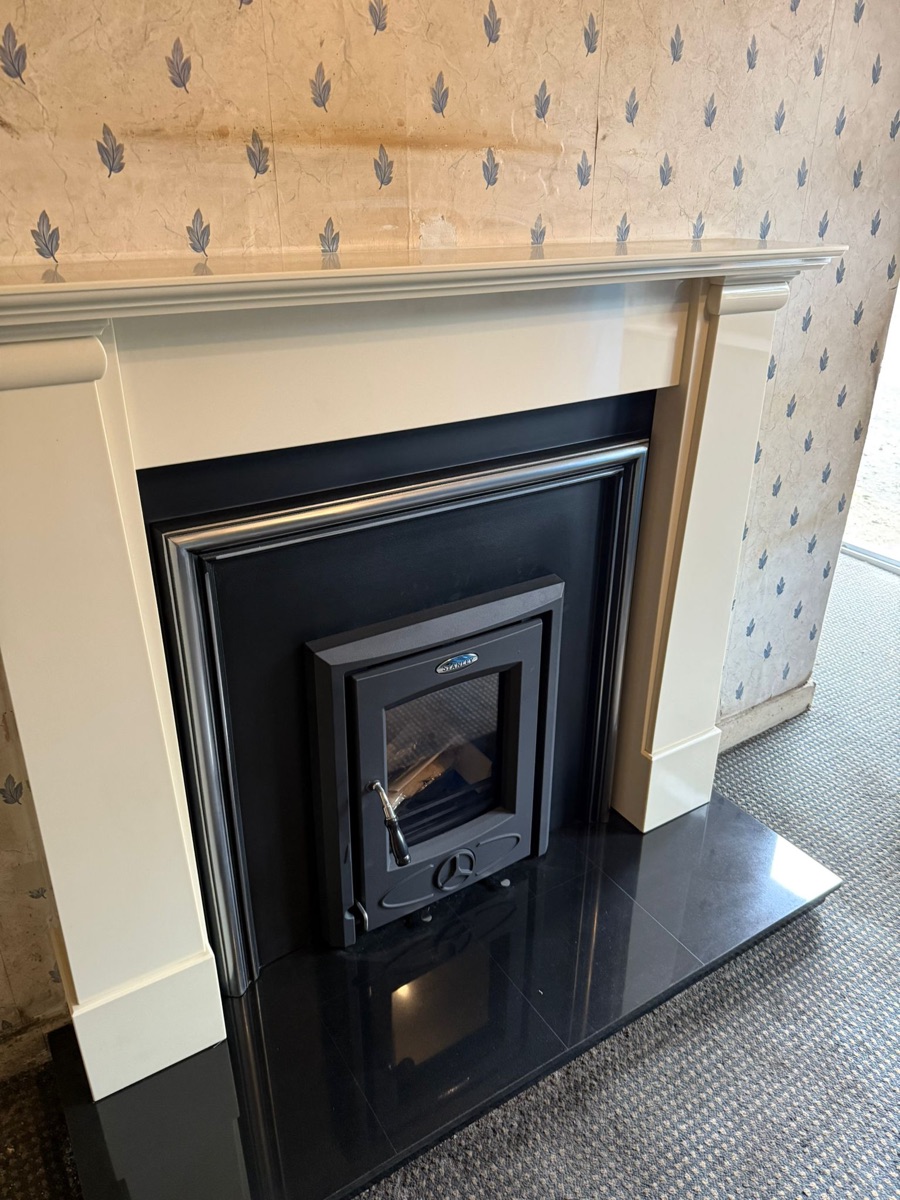
Wood burning stoves
across Wicklow
Uplands to coast, Carnew to Bray. Free survey, the draw checked before anything is fitted, certificate the day we finish.
A stove in Blessington and a stove in Bray are not the same job
Wicklow asks three different things of a stove depending on where the house is, and the right answer changes with it.
Upland Wicklow wants a stove that does real work. Exposed sites, no mains gas, oil in the tank, and a house losing heat to wind on every side. Here the stove is a heating appliance and the sizing has to reflect that.
The coastal towns, Bray through Greystones and Wicklow Town to Arklow, are denser and better served. A stove there is more often supplementary, doing the evenings and the shoulder season rather than carrying the house.
And then the holiday homes. Wicklow has 986 of them on the last census, and a stove that gets lit hard for two weeks a year needs different advice from one lit nightly from October to April. That section is further down, because almost nobody writes it.
South Wicklow is our own back yard, incidentally. Carnew is about fifteen minutes from base at Clonegall, Shillelagh under twenty, Tinahely around twenty-five.
How you buy the wood matters more than the stove
Most of Wicklow outside the coastal towns heats with oil, and the case for a stove usually gets made with a sales line rather than a number. These are SEAI's own figures from the Domestic Fuel Cost Comparison, updated quarterly.
| Fuel, as bought | Cost per kWh |
|---|---|
| Softwood, bulk loose, delivered | 8.5c |
| Softwood, full pallet, delivered | 10.4c |
| Hardwood, small bags, collected | 15.3c |
| Kerosene (typical discounted) | 17.2c |
Bulk loose softwood is half the cost of kerosene per unit of heat. Hardwood bought by the bag is barely cheaper than the oil you were trying to get away from. Same stove, same room; the buying decides it.
Which is awkward for holiday homes specifically, because bags are exactly what you buy when you arrive on a Friday with nothing stacked. If the house is used often enough to matter, a bulk load in a dry outbuilding changes the economics completely.
Stoves for houses that are used a few weeks a year
This gets almost no coverage anywhere and it comes up constantly in Wicklow. A stove in a house that is occupied a fortnight a year plus the odd weekend is a different specification from one in a house lived in daily, and getting it wrong produces a stove nobody enjoys using.
Cold flues draw badly, and that makes people over-fire
A flue that has stood unused and unheated for weeks is cold and often damp, and a cold flue does not draw. The fire is sulky on lighting, smoke drifts into the room, and the natural response is to pile it on and open everything up to force it. That over-firing is how liners get damaged and how chimney fires start.
A correctly sized liner is the fix, and it is one of the situations where lining earns its keep even on a flue that is structurally fine. A liner has far less mass than a masonry flue, so it warms through in minutes rather than an hour, and the stove behaves on the first evening rather than the third.
Size down, not up
The instinct with an occasional-use house is to buy big so it heats quickly from cold. It is the wrong move. A large stove in a small room gets throttled back within twenty minutes to make the room bearable, and a throttled fire smoulders and tars the flue. You want the correctly sized stove run properly hot, not an oversized one run shut down.
Birds, and the autumn check
An unused flue is an attractive place to nest. Jackdaws in particular will fill a chimney over a spring, and nobody is there to notice. The single most useful habit for a holiday home is an inspection and sweep in early autumn, before the first cold weekend rather than after an incident. It is also the cheapest hour anybody spends on one of these houses.
If the house is let out, the certificate matters more than usual too. Keep it with the property paperwork.
If the chimney already smokes back, fix the draw first
Wicklow's terrain produces more downdraught complaints than anywhere else we work. Where a house sits below rising ground, wind spilling off the slope above creates a pressure zone over the roof that pushes down the flue instead of drawing across the top of it. The tell is that it happens on some wind directions and not others.
Fitting a stove onto a flue that already downdraughts does not solve it. A closed stove is more sensitive to a poor draw than an open fire, not less, because it depends on the flue pulling a controlled amount of air through a small opening. Put a good stove on a bad flue and you get a stove that will not light cleanly and glass that blackens in an evening.
The remedy is usually extra height on the flue or an anti-downdraught cowl, and both cost a fraction of a rebuild. It gets checked at survey, before anything is ordered. If it turns out your chimney needs structural work rather than a cowl, that is covered on chimney repair in Wicklow.
Exposure changes the sum
The standard starting point is room volume in metres divided by 14, which gives roughly the kilowatts needed to hold about 21°C. A 4 m by 5 m room with a 2.4 m ceiling is 48 m³, so about 3.4 kW.
Wicklow is where that sum most often needs adjusting upward. A house on open upland ground loses heat to wind on all four elevations, and wind stripping heat off a wall behaves like a bigger room from the stove's point of view. A sheltered house in a Greystones estate and an exposed farmhouse above Aughrim can have identical room dimensions and want different stoves.
That said, the more common error is still oversizing. A stove too big for the room gets run with the air shut down, and a smouldering fire tars the flue, blackens the glass and voids many warranties. Most Wicklow homes still land on 4 to 6 kW.
The stove size calculator runs the arithmetic with adjustments built in, and the stove selector narrows the type in four steps. Inset, freestanding, boiler and pellet are covered in full on the main stove guide.
Fitted to Part J, not to the UK rulebook
Stove advice aimed at Irish homeowners is often quietly British, citing DEFRA exemption, Smoke Control Areas, HETAS registration and Approved Document J. None of those govern an installation in Wicklow. The document that does is Technical Guidance Document J.
Air supply. TGD J requires a permanent ventilation opening of at least 6,500 mm² free area for any non-room-sealed solid fuel appliance. There is no under-5 kW exemption in Ireland; that is the UK rule. Above 5 kW in a reasonably airtight house you add 550 mm² per extra kilowatt, so an 8 kW stove needs 8,150 mm². The words free area matter, because a grille reduces it considerably and the hole cored through the wall ends up bigger than people expect.
Flue size. TGD J Table 2 sets 150 mm minimum internal diameter for a closed appliance up to 20 kW burning timber, peat or bituminous coal. Only smokeless fuel or wood pellets may go to 125 mm. Plenty of stoves ship with a 125 mm spigot, which is fine for smokeless and not compliant for wood.
Hearth. A constructional hearth is at least 125 mm of solid non-combustible material; a free-standing hearth on a non-combustible floor can be 12 mm. Back boilers are 125 mm, or 25 mm on non-combustible supports at least 25 mm high.
And plainly: there is no statutory register of stove installers in the Republic. HETAS left Ireland in March 2022, OFTEC registration carries no self-certification rights here, and METAC trains rather than registers. Check insurance, previous work and the certificate instead.
What a stove costs in Wicklow
Covering labour, materials, waste away, commissioning and the certificate. Chimney work is added as its own line rather than buried in the fit price.
| Work | Typical range | Time on site |
|---|---|---|
| Home survey, CCTV where needed | Free, no obligation | About an hour |
| Inset stove, supplied and fitted | €2,200 – €3,500 | 1 day |
| Freestanding stove, supplied and fitted | €2,500 – €4,000 | 1 day |
| Boiler stove, plumbed into your heating | €3,500 – €5,500 | 2 – 3 days |
| Chimney liner, if the survey calls for one | €1,000 – €2,500 | Same day as the fit |
| Twin-wall flue, where there is no chimney | €1,800 – €3,200 | 2 – 4 days |
A stove into a sound, correctly sized chimney with a usable hearth sits at the bottom of its band. A holiday cottage above Rathdrum needing a liner, a new hearth and a cored vent sits near the top, plus the liner line. The survey is free because nobody can tell which from a phone call.
Prices include VAT. Indicative only, with an exact figure in writing after the survey.
What you burn, and where you keep it
A new liner can be tarred up inside two winters by wet timber, and in a house that is only used intermittently it happens faster still, because a cold flue condenses more of what passes through it.
Under S.I. 529/2022, wood sold for burning in homes must be at or below 25% moisture, tightening to 20% from 1 September 2026. The regulations govern the sale of fuel rather than what you burn at home, and they do not apply to timber you season yourself.
Storage is the Wicklow problem more than supply. Timber stacked in a damp outbuilding on high ground does not season, it just sits there being wet, and open-sided log stores facing the prevailing wind take in more rain than they shed. What works is a covered top, open sides facing away from the weather, and the stack off the ground on pallets.
For a holiday home, the calculation changes again. Buying bags on arrival is the expensive way to do it, at roughly double the cost per unit of heat of a bulk load. If the house gets used often enough to matter, a bulk delivery into a dry outbuilding once a year is worth doing even allowing for what sits unused.
Never burn treated or painted timber, pallets, chipboard, MDF or driftwood. Driftwood is worth naming specifically on this coast: the salt in it is corrosive to a liner and to the stove itself.
Have the flue swept once a year in regular use, and before the season in a holiday home. No Irish insurer makes annual sweeping a condition of cover, whatever you have been told, but it remains the cheapest hour anybody spends on a stove.
Every corner of the county
Four Eircode routing keys cover Wicklow: A67 Wicklow Town and Rathnew, A98 Bray, A63 Greystones, Delgany, Kilcoole and Newtownmountkennedy, and Y14 Arklow.
What actually happens
Dust sheets down and the floor covered first. The old fire or insert comes out and the opening gets checked once it is empty, which is where the occasional surprise appears. If it does, you hear about it before it costs anything.
If a liner is going in, that is roof work: fed down from the top, connected at the stove, sealed at the pot with a closure plate and cowl. On an exposed site the cowl choice gets made here rather than as an afterthought. Hearth next where the existing one falls short of the 125 mm or 12 mm required, then the stove set, levelled and connected.
The air vent is cored through the outside wall and grilled. Least glamorous part of the day and the part most often missing on stoves fitted by somebody else.
Then it gets lit before we leave, to check the draw and so you see it working. Expect a smell off the paint curing for the first few fires. You get shown how to light it, how to run the air, what to burn and what never to, and the certificate goes in your hand before the van moves.
Fifteen minutes from the Wicklow border
Johnny Roberts runs J.Roberts Solid Fuel Services on his own out of Clonegall, a quarter of an hour from Carnew. Ring the number and you get him. The person who surveys the room is the person who fits the stove and the person who comes back if it does not draw right.
Which is exactly why the advice on this page is as blunt as it is, particularly about downdraught. There is no percentage in fitting a stove onto a flue that was never going to work.
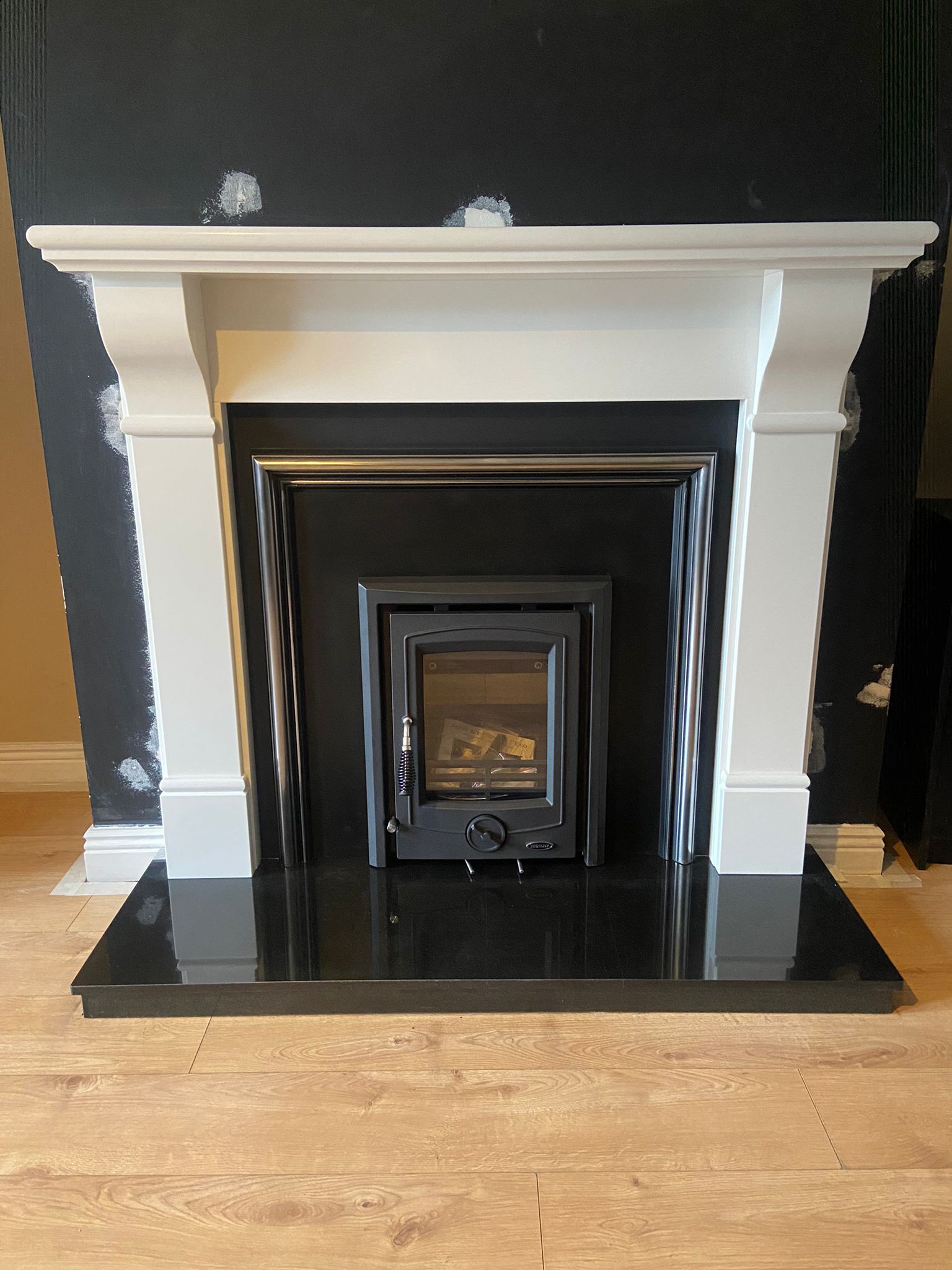
Wood burning stoves in Wicklow. FAQ
How much does a stove cost to install in Wicklow?
An inset stove supplied and fitted is €2,200 to €3,500. Freestanding €2,500 to €4,000. Boiler stove €3,500 to €5,500. A liner adds €1,000 to €2,500 where needed, and a twin-wall flue where there is no chimney is €1,800 to €3,200.
What stove suits a holiday home?
A smaller one than you would fit in a permanently occupied house, and almost always a lined flue. A cold flue that has stood unused draws badly on first light, which tempts people to over-fire. A liner warms through in minutes rather than an hour, so the stove behaves on the first evening rather than the third.
Do I need an air vent for a stove in Ireland?
Yes. TGD J requires a permanent ventilation opening of at least 6,500 mm² free area for any non-room-sealed solid fuel appliance. There is no under-5 kW exemption here. That rule is from the UK's Approved Document J.
My chimney smokes back on windy days. Can I still fit a stove?
Yes, but sort the draw first. That is usually downdraught, and in Wicklow it is frequently terrain rather than the chimney. A closed stove is more sensitive to a poor draw than an open fire, not less. Extra height or an anti-downdraught cowl normally fixes it for a fraction of a rebuild.
What size stove do I need?
Room volume divided by 14 gives roughly the kilowatts to hold about 21°C. Exposed upland houses often need a step up from what the sum suggests, because wind stripping heat off every elevation behaves like a bigger room. Most Wicklow homes still land on 4 to 6 kW.
Is a stove cheaper to run than oil?
It depends how you buy the wood. Bulk loose softwood delivered is around 8.5c per kWh on SEAI's figures against kerosene at 17.2c. Hardwood in small bags is about 15.3c, which barely beats the oil.
Does my chimney need lining?
Not automatically. Lining is needed where the flue is oversize, leaks between floors, or shows cracking on camera. Two Wicklow situations make it likelier: upland houses with wide flues built for turf, and terraced coastal housing where flues share a party wall.
What size flue does a wood burning stove need?
At least 150 mm internal diameter for a closed appliance up to 20 kW burning timber, peat or bituminous coal, under TGD J Table 2. Only smokeless fuel or pellets may use 125 mm.
Can I run radiators off a stove?
Yes, with a boiler stove. The output splits. A 13 kW stove might give 4 kW to the room and 9 kW to the system, and you size the room against the 4. Budget two to three days.
Is there an SEAI grant for a stove?
No. Stoves appear at clause 6.16 of the Deep Retrofit technical specification, but Table 1 gives them no grant coverage.
Do you cover the whole county?
Yes, across A67, A98, A63 and Y14. South Wicklow is close to base. Carnew is about fifteen minutes from Clonegall, Shillelagh under twenty, Tinahely around twenty-five.
Free planning tools
Plan your Wicklow stove in 5 minutes, free
Related guides & nearby counties
Thinking about a stove in Wicklow?
The survey is free and it checks the draw before anything gets ordered. Worst case you find out the chimney is grand and you needed less than you thought.